
Did you know that teams working in collaborative environments can increase productivity by as much as 39 percent? The way people communicate and share ideas together shapes more than just workflow, it can spark innovation and boost job satisfaction. Understanding the key types of workspaces, the impact of technology, and the power of shared leadership helps any team thrive and navigate common challenges that come with collaboration.
Defining Collaborative Environments and Core Principles
A collaborative environment represents more than just a physical workspace – it’s a dynamic ecosystem where professionals unite, communicate, and create collectively. According to research on collaborative working environments (CWEs), these spaces enable professionals to work together seamlessly, transcending geographic limitations through strategic technological tools and human-centered design.
The core principles of collaborative environments revolve around three critical dimensions: social, organizational, and technical elements. Technological integration plays a pivotal role, with tools like instant messaging, video conferencing, document version control, and task management platforms creating interconnected workflows. As research from collaborative working environment studies indicates, these platforms support both individual productivity and cooperative team dynamics.
At the heart of successful collaborative environments lies shared leadership, a transformative approach where leadership roles and influence are distributed among team members rather than centralized. Multiple studies have demonstrated that this approach significantly enhances team effectiveness by promoting:
- Increased team engagement
- Higher levels of trust
- Stronger consensus building
- Greater overall team satisfaction
By dismantling traditional hierarchical structures and empowering every team member to contribute meaningfully, collaborative environments create a culture of mutual respect, continuous learning, and collective achievement.
Types of Collaborative Workspaces Explained
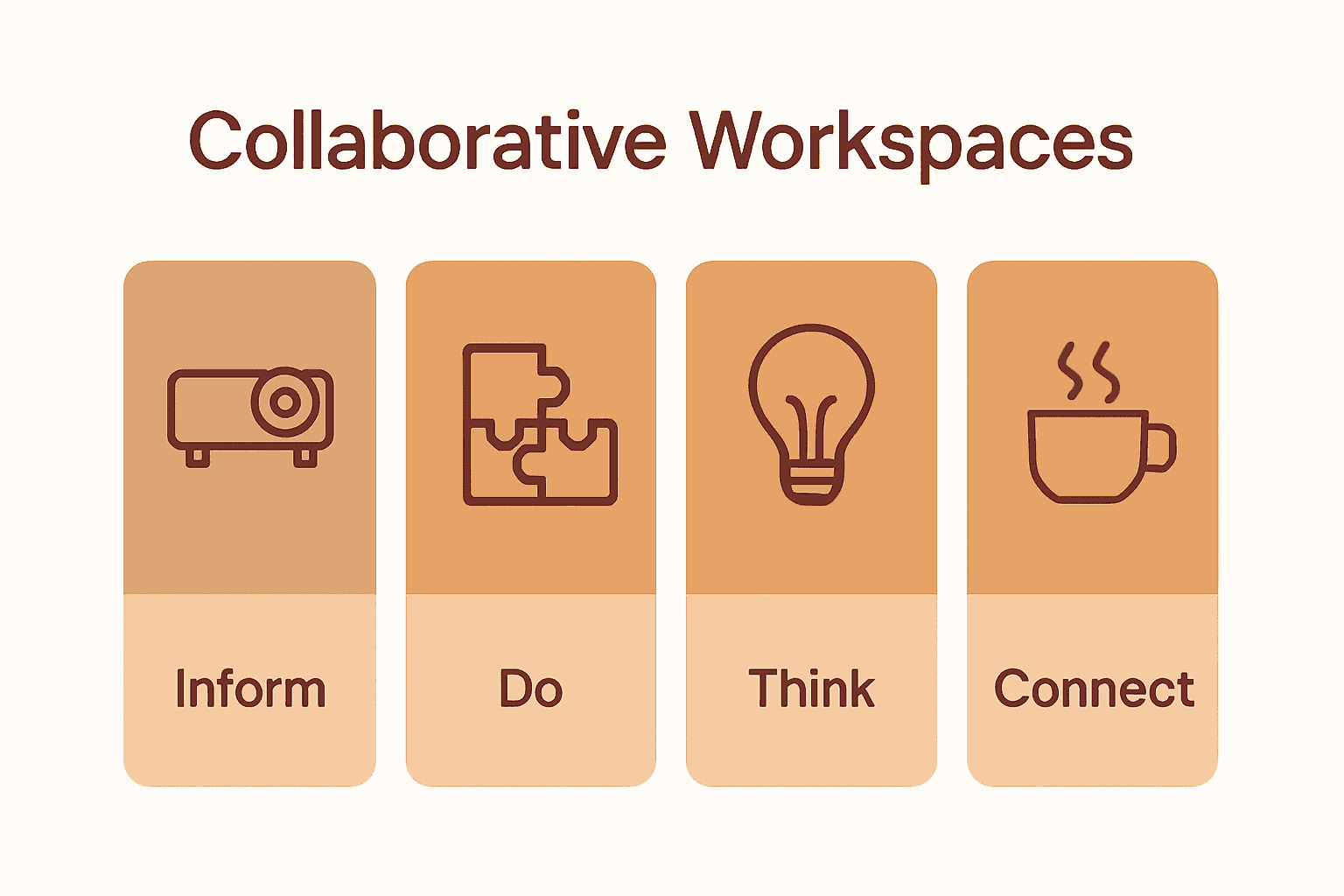
Collaborative workspaces have evolved far beyond traditional office setups, offering dynamic environments tailored to different professional needs and interaction styles. According to research from Haworth, these spaces can be strategically categorized into four distinct types, each designed to support specific work dynamics and team interactions.
The first type is the Inform space, which prioritizes information sharing through presentation-oriented layouts. These areas are typically equipped with advanced audiovisual technology, allowing teams to communicate complex ideas, share presentations, and facilitate knowledge transfer. In contrast, Do spaces focus on tactical teamwork, providing shared work surfaces and tools that enable hands-on collaboration and immediate problem-solving.
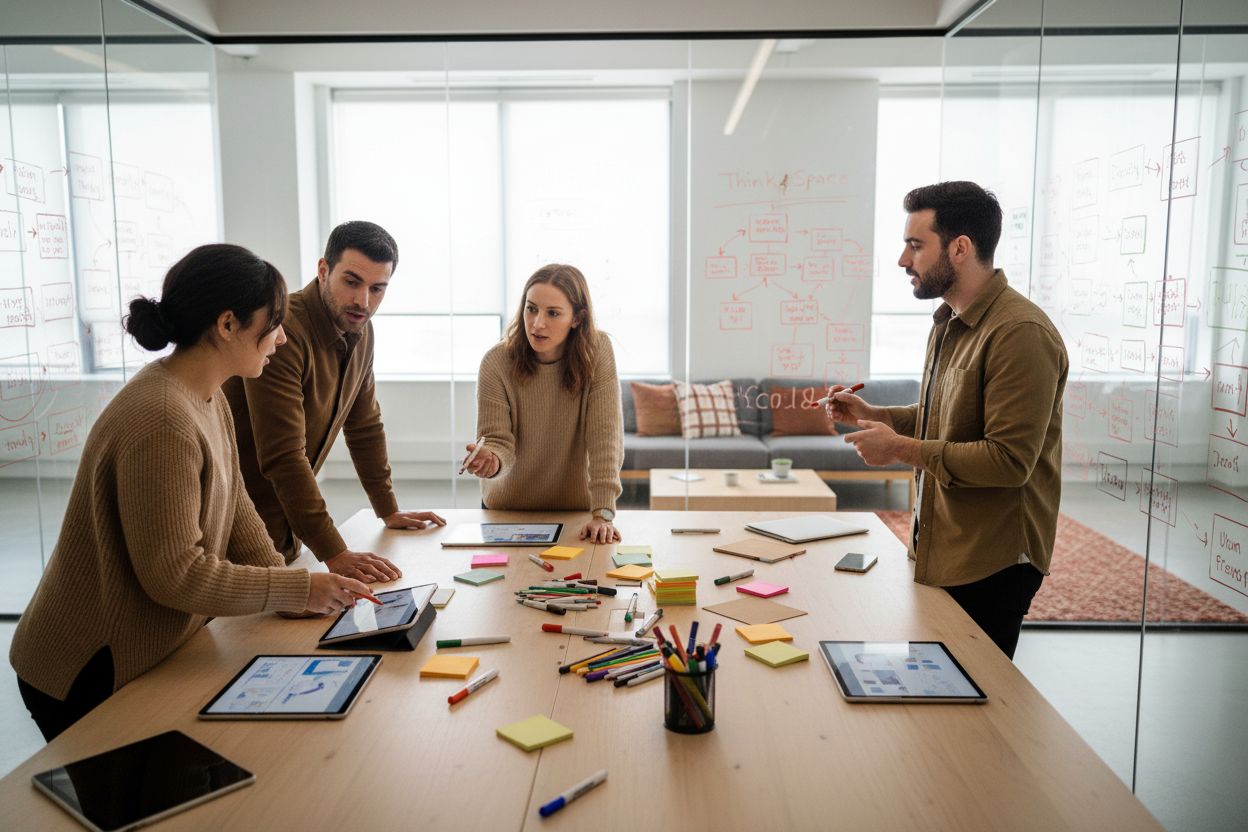
Another critical collaborative workspace type is the Think space, specifically designed for brainstorming and strategic idea generation. These environments feature informal, flexible layouts that encourage creativity, spontaneous discussions, and innovative thinking.
 The fourth category, Connect spaces, are deliberately crafted to foster spontaneous personal interactions, resembling relaxed lounge-like settings that break down formal barriers and promote organic team bonding.
Here’s a comparison of the four main types of collaborative workspaces:
| Workspace Type | Main Purpose | Typical Features | Best For |
|---|---|---|---|
| Inform Space | Sharing information | Presentation tools AV equipment |
Briefings Knowledge transfer |
| Do Space | Tactical teamwork | Shared work surfaces Hands-on tools |
Problem-solving Group tasks |
| Think Space | Idea generation | Flexible layouts Creative zones |
Brainstorming Innovation sessions |
| Connect Space | Social interaction | Lounge setting Relaxed atmosphere |
Team bonding Casual meetings |
Beyond traditional office configurations, coworking spaces have emerged as a flexible alternative for remote workers and independent professionals. As research indicates, these shared office environments provide essential infrastructure and services while simultaneously addressing the challenge of social isolation. By offering common utilities, equipment, and a sense of community, coworking spaces represent a modern solution for professionals seeking collaborative and flexible work environments.
How Collaboration Drives Team Performance
Team collaboration is more than a buzzword – it’s a critical performance multiplier that transforms how organizations achieve their goals. According to research, purposeful collaboration can dramatically boost productivity by up to 39 percent, creating significant competitive advantages for organizations willing to invest in collaborative strategies.
The power of collaboration extends far beyond simple productivity metrics. A large-scale quasi-randomized study revealed a fascinating “team player effect” where individuals with strong interpersonal skills consistently elevate team success. This effect becomes even more pronounced as team familiarity increases and team size grows, demonstrating that social skills are just as important as technical proficiency in driving performance.
Collaboration delivers multiple strategic benefits that directly impact organizational effectiveness:
- Improved employee engagement and retention
- Significant reduction in workplace misunderstandings
- Enhanced communication across different team segments
- More adaptive and resilient team structures
Remote and hybrid teams particularly benefit from robust collaborative approaches. By creating intentional opportunities for interaction, knowledge sharing, and collective problem-solving, organizations can transform potential communication barriers into powerful channels of innovation and collective achievement. The modern workplace is no longer about individual contributions, but about creating synergistic environments where collective intelligence becomes the ultimate competitive advantage.
Psychological and Social Benefits for Teams
Team collaboration transforms workplace dynamics far beyond mere productivity, deeply impacting psychological well-being and social connection. A compelling study examining over 100,000 daily activities revealed a remarkable insight: performing tasks with others consistently generates higher levels of happiness, even when those tasks are mundane or routine.
However, collaborative environments aren’t without psychological challenges. The Ringelmann effect highlights a critical phenomenon where individual effort can paradoxically decrease as group size increases. This underscores the importance of designing collaborative spaces that maintain individual accountability and engagement, ensuring each team member feels valued and motivated to contribute meaningfully.
The social and psychological benefits of collaborative environments are multifaceted:
- Increased sense of belonging and community
- Reduced feelings of workplace isolation
- Enhanced emotional support and mutual understanding
- Opportunities for personal growth through shared experiences
- Improved mental resilience through collective problem-solving
By creating intentional spaces that balance social interaction with individual recognition, teams can cultivate an environment where psychological safety thrives. When team members feel genuinely connected, supported, and empowered, they’re more likely to take creative risks, share innovative ideas, and develop deeper, more meaningful professional relationships that extend beyond traditional workplace interactions.
Common Mistakes and How to Avoid Them
Collaborative environments are powerful, but they’re not immune to potential pitfalls that can dramatically undermine team effectiveness. According to research from leading collaboration experts, organizations frequently stumble into predictable traps that can derail even the most well-intentioned teamwork.
One of the most significant mistakes teams make is tool fragmentation, where collaboration gets spread across multiple platforms, creating confusion and context-switching. This approach fragments communication and reduces overall productivity. Research suggests creating a single source of truth for team interactions, enabling asynchronous collaboration that supports focused work while maintaining clear communication channels.
Key collaboration mistakes to avoid include:
- Micromanaging team members, which erodes autonomy
- Failing to establish clear communication protocols
- Neglecting to set specific and measurable deadlines
- Resisting technological adaptations and new collaboration tools
- Avoiding or mismanaging interpersonal conflicts
Successful teams proactively address these challenges by fostering a culture of transparency, mutual respect, and continuous learning. By establishing clear roles, embracing flexible communication strategies, and creating an environment that values both individual contribution and collective achievement, organizations can transform potential collaboration obstacles into opportunities for growth and innovation.
Unlock True Collaboration with The Nest
Are you tired of tool fragmentation, uninspired meetings, and team silos holding your progress back? The research is clear: shared leadership, flexible workspaces, and meaningful connections are essential for high-performing teams. Yet, many teams struggle to break free from the old patterns. Imagine stepping into an environment where collaborative work actually happens and where team members feel valued and energized. See how The Nest transforms theory into reality.

Level up your next team retreat or strategy session by experiencing immersive workshops and thoughtfully designed spaces at The Nest. It is built for teams that want to rediscover their potential and build real connections. Now is the best time to leave ineffective habits behind. Explore how your team can recharge, learn, and thrive in a truly collaborative space. Book your next experience at The Nest and watch your team transform.
Frequently Asked Questions
What are collaborative environments?
Collaborative environments are dynamic ecosystems where professionals work together, communicate, and create collectively, using technological tools and human-centered design to enhance teamwork.
What are the core principles of effective collaborative environments?
The core principles revolve around social, organizational, and technical elements, with a focus on shared leadership, technological integration, and an inclusive culture that promotes individual engagement and team satisfaction.
What types of collaborative workspaces are there?
There are four main types of collaborative workspaces: Inform spaces (for sharing information), Do spaces (for tactical teamwork), Think spaces (for idea generation), and Connect spaces (for social interaction), each serving different professional needs.
How does collaboration impact team performance?
Collaboration boosts team performance by enhancing productivity, improving employee engagement, reducing misunderstandings, and fostering better communication, particularly within remote and hybrid teams.