
Team collaboration is shaping the future of how work gets done, touching everything from productivity to innovation across industries. And yet, while most people think teamwork just means a few meetings and shared documents, the real numbers tell a different story. Collaborative activities in companies have grown by over 50% in the past twenty years. That is not the whole picture though. The most surprising insight is that true collaboration goes far beyond the occasional group project. It is now the engine that drives profits, creativity, and even day-to-day survival in the modern workplace.
Defining Team Collaboration: Importance in the Modern Workplace
Team collaboration represents a strategic approach where individuals work together toward shared objectives, leveraging collective skills and expertise to achieve superior outcomes. In today’s complex business environment, effective collaboration has transformed from a desirable skill to an organizational necessity.
The Evolving Nature of Workplace Interactions
Workplace dynamics have dramatically shifted, with technology and global connectivity reshaping how teams communicate and execute projects. Research from Harvard Business Review reveals that collaborative activities have increased by over 50% in the past two decades, signaling a profound change in organizational structures and work methodologies.
Key characteristics of modern team collaboration include:
-
Seamless communication across geographical boundaries
-
Integrated technological platforms supporting real-time interactions
-
Emphasis on collective problem solving
-
Flexible and adaptive team structures
Strategic Value of Collaborative Environments
Successful team collaboration delivers significant organizational advantages. When teams work cohesively, they generate innovative solutions, reduce operational inefficiencies, and create synergistic environments where individual strengths complement collective goals.
According to Gallup workplace studies, organizations with highly engaged collaborative teams experience 21% higher profitability.
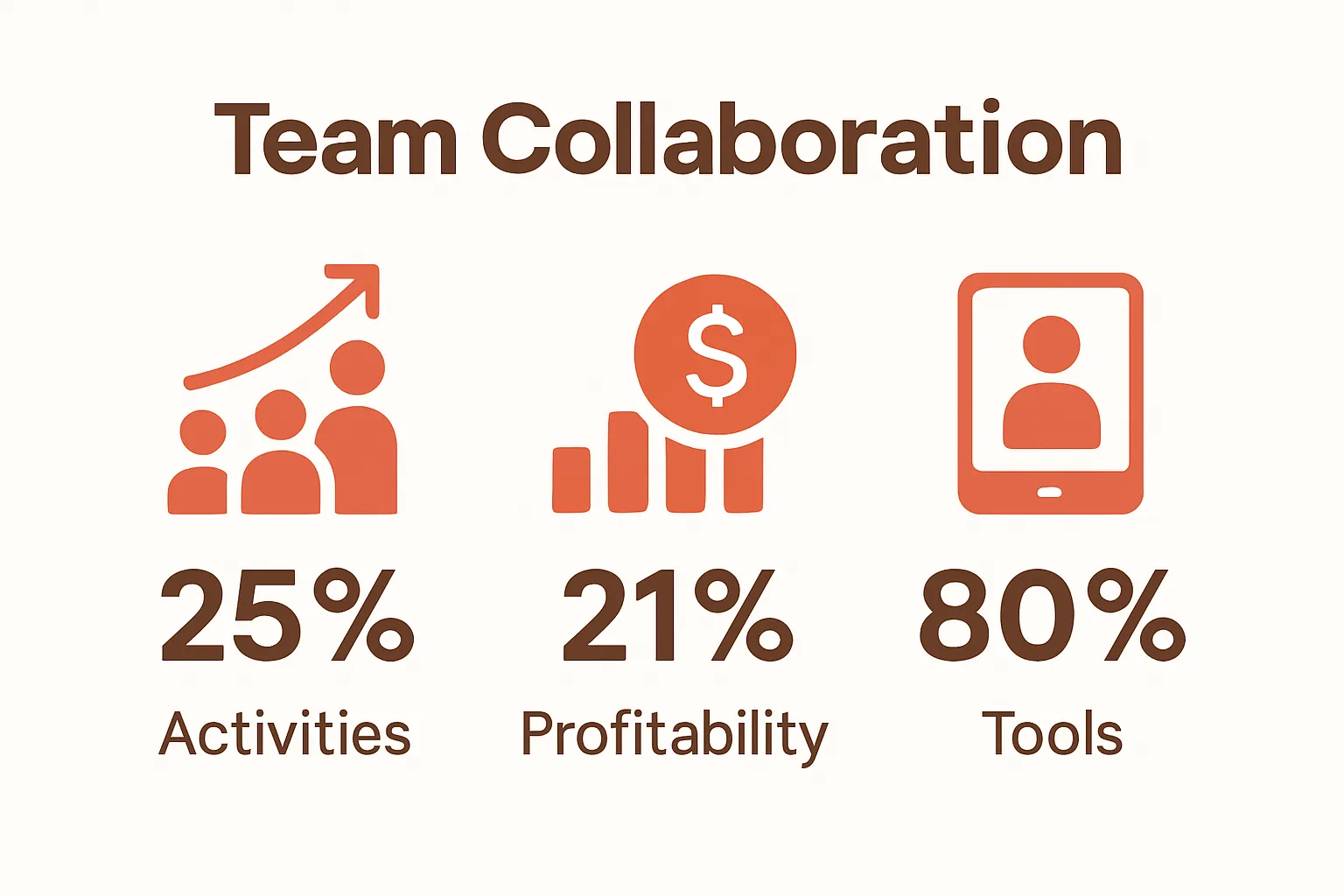 This statistic underscores collaboration’s critical role beyond mere interpersonal interactions.
Building Collaborative Competencies
Transforming workplace culture requires intentional strategies. Effective team collaboration demands developing specific skills such as active listening, constructive communication, mutual respect, and openness to diverse perspectives. Organizations must invest in creating environments that encourage knowledge sharing, support cross-functional interactions, and recognize collaborative achievements.
Ultimately, team collaboration is not just about working together but about creating an ecosystem where collective intelligence drives organizational success.
The Role of Communication in Effective Team Collaboration
Communication serves as the fundamental cornerstone of successful team collaboration, acting as the primary mechanism through which ideas are exchanged, strategies developed, and collective goals realized. Effective communication transcends mere information transmission, encompassing a complex interplay of verbal, nonverbal, and digital interactions that shape team dynamics and organizational performance.
Communication Channels and Technological Integration
Research from MIT’s Sloan Management Review highlights that modern teams leverage multiple communication channels to enhance collaboration. Digital platforms have revolutionized how teams interact, breaking down geographical barriers and creating unprecedented opportunities for real-time engagement.
Key communication channels include:
-
Synchronous digital platforms (video conferencing, live chat)
-
Asynchronous communication tools (email, project management software)
-
Collaborative documentation systems
-
Virtual team spaces and shared digital workspaces
Barriers to Effective Team Communication
Communication challenges can significantly impede team performance. Misunderstandings, cultural differences, and technological limitations can create friction that reduces team productivity.
The following table compares common barriers to effective team communication and their effects, helping to clarify which aspects organizations must address to enhance collaboration.
| Barrier | Impact on Team Collaboration |
| Misaligned expectations | Leads to confusion and decreased productivity |
| Lack of clear communication protocols | Causes misunderstandings and workflow disruptions |
| Technological disconnects | Interrupts information flow and team cohesion |
| Cultural and linguistic differences | Creates friction and potential exclusion |
Common communication barriers include:
-
Misaligned expectations
-
Lack of clear communication protocols
-
Technological disconnects
-
Cultural and linguistic differences
Developing a Communication-Centric Collaboration Culture
Building a robust communication framework requires deliberate organizational investment. Workplace communication research demonstrates that teams with strong communication practices experience higher engagement, increased trust, and more innovative problem-solving approaches.
Effective communication in team collaboration is not about volume but about quality, clarity, and context. Organizations must create environments that encourage open dialogue, active listening, and meaningful exchanges that transform individual insights into collective intelligence.
Key Concepts of Team Dynamics and Collaboration Tools
Team dynamics represent the intricate psychological and interpersonal processes that influence group behavior, performance, and overall effectiveness. Understanding these complex interactions becomes crucial for organizations seeking to optimize collective performance and drive meaningful outcomes.
Foundational Elements of Team Dynamics
Research from the National Institutes of Health reveals that successful team dynamics are built on critical psychological and operational foundations. These foundations create the underlying infrastructure that enables teams to function cohesively and productively.
Below is a table outlining the foundational elements of team dynamics and their impact on collaboration as described in the article.
| Foundational Element | Description |
| Mutual trust and psychological safety | Builds an environment where members feel secure sharing ideas |
| Clear and shared objectives | Ensures everyone is aligned toward common goals |
| Complementary skill sets | Leverages diverse strengths for improved problem solving |
| Effective communication mechanisms | Facilitates seamless information exchange and understanding |
| Adaptive problem solving capabilities | Allows teams to quickly respond to challenges and changing needs |
Key foundational elements include:
-
Mutual trust and psychological safety
-
Clear and shared objectives
-
Complementary skill sets
-
Effective communication mechanisms
-
Adaptive problem solving capabilities
Technological Enablers of Team Collaboration
Modern collaboration tools have revolutionized how teams interact, communicate, and execute projects. These technological platforms provide sophisticated mechanisms for bridging geographical distances, facilitating real-time information exchange, and maintaining transparent workflows.
Advanced collaboration tools offer:
-
Project management platforms
-
Virtual meeting and videoconferencing software
-
Shared document and resource repositories
-
Real-time messaging and communication systems
-
Performance tracking and analytics dashboards
Developing High-Performance Team Environments
Creating environments that nurture effective team dynamics requires strategic investment in both human and technological resources. Organizations must focus on developing adaptive team structures that can quickly respond to changing business landscapes while maintaining strong interpersonal connections.
Successful team dynamics emerge from a delicate balance between individual autonomy and collective accountability.
 By understanding and implementing sophisticated collaboration strategies, teams can transform potential challenges into opportunities for innovation and growth.
The Impact of Culture and Diversity on Team Collaboration
Cultural diversity represents a powerful catalyst for organizational innovation, transforming team dynamics by introducing varied perspectives, unique problem-solving approaches, and rich interpersonal experiences. Modern workplaces increasingly recognize diversity not as a compliance requirement, but as a strategic advantage that drives creativity and competitive performance.
Understanding Cultural Complexity in Teams
Research from the American Psychological Association demonstrates that culturally diverse teams possess extraordinary potential for generating breakthrough solutions. Cultural differences introduce multifaceted cognitive approaches that challenge traditional thinking patterns and stimulate more comprehensive problem resolution.
Key dimensions of cultural complexity include:
-
Varied communication styles
-
Different decision making frameworks
-
Unique perspectives on hierarchy and collaboration
-
Distinct interpretations of professional interactions
-
Diverse approaches to conflict resolution
Psychological Foundations of Inclusive Collaboration
Successful cross-cultural collaboration requires developing psychological safety and mutual respect. Teams must create environments where individuals feel empowered to share perspectives without fear of marginalization or misunderstanding. This approach transforms cultural differences from potential barriers into valuable organizational assets.
Critical elements of inclusive team environments include:
-
Active listening practices
-
Intentional empathy development
-
Structured cultural exchange opportunities
-
Transparent communication protocols
-
Mutual learning and adaptation strategies
Strategic Approaches to Cultural Integration
Organizations committed to leveraging cultural diversity must implement deliberate strategies that recognize, celebrate, and systematically integrate varied cultural perspectives. This process involves continuous learning, adaptive leadership, and creating flexible frameworks that accommodate different cultural working styles.
Ultimately, cultural diversity in team collaboration is not about achieving surface-level representation but about creating genuine pathways for meaningful exchange, mutual understanding, and collective excellence.
Real-World Examples of Successful Team Collaboration Practices
Effective team collaboration transcends theoretical concepts, finding tangible expression through strategic organizational implementations that demonstrate measurable performance improvements. Real-world examples illuminate how diverse teams leverage collective intelligence to solve complex challenges and drive innovative outcomes.
Collaborative Innovation Models
Stanford Social Innovation Review highlights that successful collaborative practices emerge from intentional design, clear communication protocols, and adaptive organizational structures. Innovative organizations create environments that encourage cross-functional interactions and knowledge sharing.
Key characteristics of successful collaborative innovation include:
-
Flat hierarchical structures
-
Transparent communication channels
-
Reward systems that recognize collective achievements
-
Continuous learning and skill development opportunities
-
Flexible project management approaches
Technology-Enabled Collaboration Frameworks
Modern organizations leverage technological platforms to create seamless collaborative experiences. Digital tools enable teams to transcend geographical limitations, synchronize complex workflows, and maintain real-time communication across diverse operational contexts.
Effective technology-enabled collaboration strategies involve:
-
Cloud-based project management platforms
-
Integrated communication ecosystems
-
Performance tracking and analytics tools
-
Virtual collaboration spaces
-
Asynchronous communication mechanisms
Building High-Performance Collaborative Cultures
Successful team collaboration requires more than technological infrastructure. Organizations must cultivate psychological safety, mutual respect, and a shared commitment to collective excellence. This involves creating organizational cultures that value diverse perspectives, encourage constructive dialogue, and view collaboration as a strategic competency.
Ultimately, effective team collaboration is an ongoing journey of learning, adaptation, and collective growth. By embracing complexity, fostering open communication, and creating supportive environments, organizations can transform collaborative potential into tangible competitive advantages.
Transform Team Collaboration Into Lasting Success – Experience The Nest
Are you tired of endless meetings, muddled communication, or disconnected teams holding back your progress? If the article on understanding successful team collaboration resonated with you, it is because you understand the cost of poor communication, unclear objectives, and siloed work. The Nest is made for teams like yours who want to break out of stagnant routines and unlock true creative energy. Our specially-designed retreats and powerful hands-on workshops reflect the core concepts discussed in this guide, from open communication to building real trust and leveraging the strength of diverse perspectives.
Stop letting collaboration challenges limit your team’s future. Book your next off-site, leadership session, or group strategy retreat at The Nest. Discover how our unique space and thoughtfully crafted experiences can help your team achieve breakthrough results. Unleash your team’s potential. Visit https://sharethenest.com and take the first step to building the collaborative powerhouse you always wanted.
Frequently Asked Questions
What is team collaboration and why is it important?
Team collaboration involves individuals working together towards shared objectives, enhancing productivity and innovation through collective skills and expertise. In today’s complex workplace, effective collaboration is essential for organizational success.
What role does communication play in effective team collaboration?
Communication is the cornerstone of successful team collaboration, facilitating the exchange of ideas, strategies, and goals. Effective communication helps teams navigate misunderstandings and build a cohesive working environment.
How can organizations build a culture of collaboration?
Organizations can foster a collaborative culture by developing essential skills like active listening and constructive communication, creating environments that encourage knowledge sharing, and recognizing collaborative achievements.
What are common barriers to effective team communication?
Common barriers to effective team communication include misaligned expectations, lack of clear communication protocols, technological disconnects, and cultural or linguistic differences.
Recommended
-
Fostering Team Collaboration for Powerful Results With Adobe Solutions –