
Team connection sounds simple and obvious, just coworkers getting along and doing their jobs together. The reality is far more surprising. MIT researchers found that communication quality, not individual talent, is what sets high-performing teams apart. And while you might think working together remotely would make these connections nearly impossible, science is now showing that the right strategies can actually make digital teams even stronger than those who sit across the same table.
What is Team Connection and Its Core Elements?
Team connection represents a profound organizational dynamic that goes beyond casual workplace interactions. It describes the intricate web of relationships, communication patterns, and emotional resonance that binds team members together, enabling them to work seamlessly and effectively toward shared objectives.
The Fundamental Essence of Team Connection
At its core, team connection is about creating meaningful interpersonal bonds that transcend transactional work relationships. Research from MIT’s Human Dynamics Laboratory reveals that successful teams are distinguished not by individual talent, but by the quality of their interactions and communication.
This connection manifests through several critical dimensions:
- Emotional Understanding: Recognizing and respecting team members’ individual emotional landscapes
- Trust and Psychological Safety: Creating an environment where individuals feel secure sharing ideas without fear of judgment
- Collaborative Mindset: Viewing team goals as collective achievements rather than individual competitions
Structural Components of Effective Team Connectivity
Building genuine team connection requires intentional strategies and a holistic approach. Organizational psychology research from Stanford University highlights that successful team connections are constructed through deliberate mechanisms that foster genuine human interactions.
Key structural components include:
- Transparent and open communication channels
- Regular opportunities for informal interactions
- Shared experiences that build mutual understanding
- Mechanisms for recognizing individual and collective achievements
Team connection transforms workplace dynamics from purely transactional interactions into rich, collaborative ecosystems where creativity, innovation, and collective intelligence can flourish. By understanding and intentionally cultivating these connections, organizations can unlock unprecedented levels of team performance and employee satisfaction.
The table below summarizes the core elements and structural components that define effective team connection, offering a concise reference for key features discussed in this section.
| Element | Description |
| Emotional Understanding | Recognizing and respecting individual emotional landscapes within the team |
| Trust and Psychological Safety | Promoting a safe environment for open idea-sharing without fear of judgment |
| Collaborative Mindset | Prioritizing collective achievements over individual competition |
| Open Communication Channels | Maintaining transparent, accessible avenues for team members to communicate |
| Regular Informal Interactions | Facilitating opportunities for casual, non-work conversations |
| Shared Experiences | Engaging in activities that build mutual understanding and rapport |
| Recognition Mechanisms | Acknowledging both individual and collective achievements to reinforce connection |
Why Team Connection Matters for Remote Work and Collaboration
Remote work has fundamentally transformed organizational dynamics, making team connection more critical than ever.
While digital technologies enable global collaboration, they simultaneously introduce complex challenges in maintaining meaningful interpersonal relationships and collective engagement.
The Psychological Impact of Remote Disconnection
Remote work can inadvertently create emotional distance and isolation among team members. Research from the American Psychological Association demonstrates that disconnected remote teams experience significantly higher rates of burnout, reduced motivation, and decreased overall productivity.
The psychological challenges of remote disconnection include:
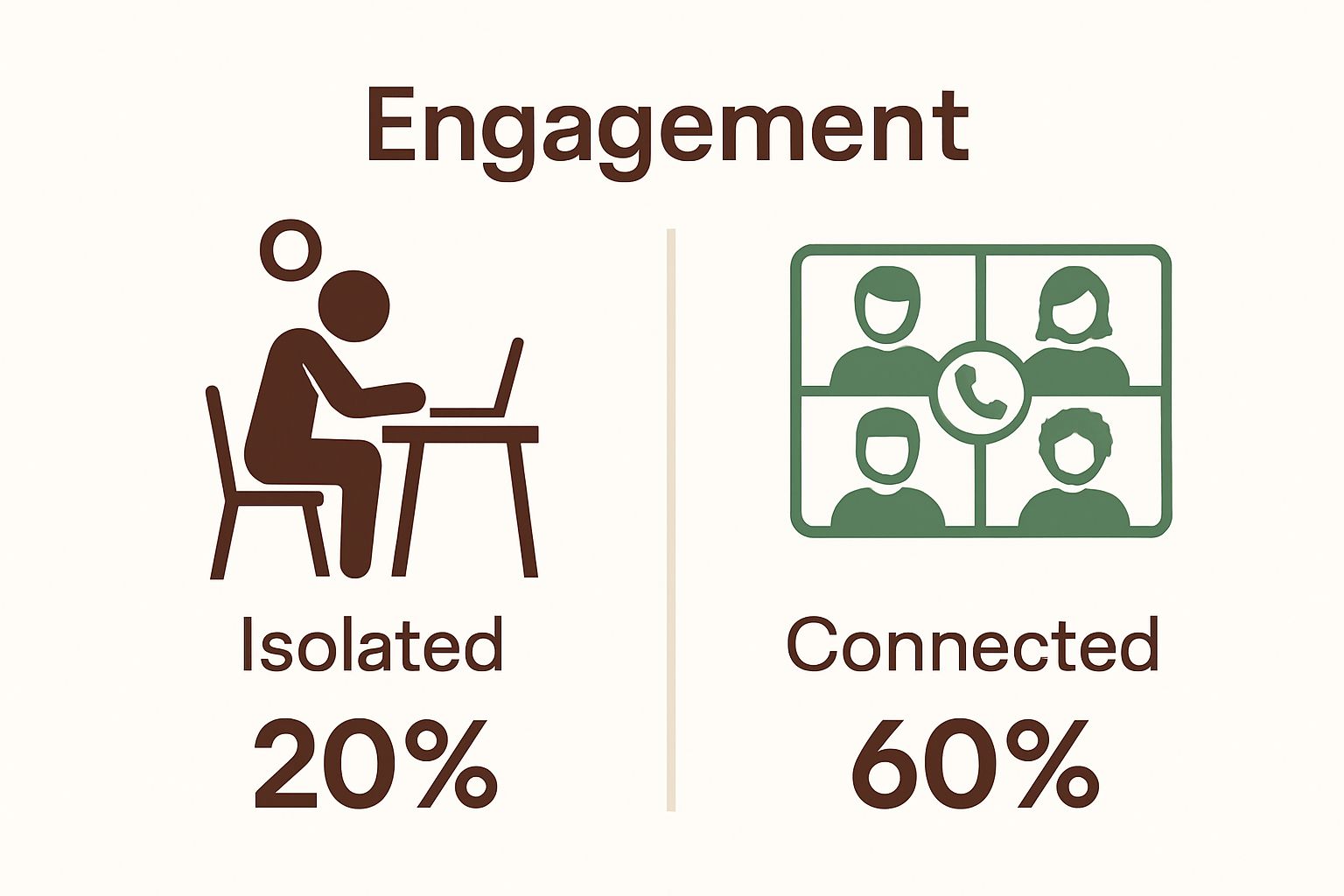
- Diminished sense of belonging
- Reduced spontaneous collaboration
- Increased feelings of professional isolation
- Weakened organizational culture
Strategic Importance of Digital Team Connectivity
Effective remote team connection requires deliberate, strategic approaches that transcend traditional workplace interactions. Modern organizations must proactively design communication frameworks that foster genuine human connections through digital platforms.
Key strategies for maintaining team connection include:
- Implementing regular video interactions beyond work-related meetings
- Creating digital spaces for informal conversations
- Developing virtual team-building activities
- Establishing clear communication protocols that encourage openness
Building robust team connections in remote environments is not just a nicety but a fundamental requirement for sustainable organizational performance. By recognizing the unique challenges of digital collaboration and implementing intentional connection strategies, teams can transform potential isolation into opportunities for meaningful, productive engagement.
This table compares the psychological challenges of remote team disconnection with strategies for maintaining digital team connection, helping readers see barriers and recommended remedies side by side.
| Challenge | Impact/Consequence | Connection Strategy |
| Diminished sense of belonging | Feeling less engaged with team and company | Conduct regular video interactions beyond work-related topics |
| Reduced spontaneous collaboration | Fewer organic opportunities for teamwork | Create digital spaces for informal conversations |
| Increased feelings of professional isolation | Decreased morale and increased burnout | Develop virtual team-building activities |
| Weakened organizational culture | Loss of shared values and identity | Establish clear, open communication protocols |
How Team Connection Enhances Productivity and Performance
Team connection is not merely a feel-good concept but a tangible driver of organizational performance. By creating robust interpersonal networks, teams can unlock extraordinary levels of collaborative potential and operational effectiveness.
The Performance Multiplier Effect
Research published in the International Journal of Environmental Research and Public Health demonstrates that teams with strong connections exhibit significantly higher performance metrics across multiple dimensions. Strong team connections transform individual capabilities into collective intelligence, enabling groups to solve complex problems more efficiently than any single member could independently.
Key performance enhancement mechanisms include:
- Accelerated knowledge sharing
- Reduced communication barriers
- Enhanced mutual accountability
- Increased psychological safety for innovative thinking
Cognitive and Collaborative Synergy
Team connection creates a synergistic environment where individual strengths are amplified through collaborative interactions. When team members feel genuinely connected, they are more likely to:
- Share critical insights without reservation
- Offer constructive feedback
- Support each other during challenging projects

- Develop creative solutions through collective brainstorming
This interconnected approach breaks down traditional organizational silos, enabling fluid communication and rapid problem-solving. By prioritizing genuine human connections, organizations can create adaptive, responsive teams capable of navigating complex business environments with unprecedented agility and innovation.
Key Concepts of Team Connection in Multinational Settings
Multinational organizations face unique challenges in creating meaningful team connections across diverse cultural, linguistic, and geographical boundaries. Understanding the nuanced dynamics of cross-cultural team interaction becomes critical for successful global collaboration.
Cultural Intelligence and Connection Strategies
Research from the Harvard Business Review reveals that successful multinational teams require more than traditional communication approaches. Cultural intelligence represents a sophisticated skill set enabling teams to navigate complex interpersonal landscapes and build genuine connections despite significant differences.
Key elements of cultural intelligence include:
- Heightened awareness of cultural communication patterns
- Ability to adapt communication styles flexibly
- Genuine curiosity about diverse perspectives
- Suspension of cultural judgment
Communication Frameworks for Global Teams
Effective multinational team connection demands intentional communication strategies that transcend linguistic and cultural barriers. Organizations must develop robust frameworks that promote understanding, respect, and collaborative engagement across different professional environments.
Critical communication strategies encompass:
- Establishing clear, universally understood communication protocols
- Utilizing translation and interpretation technologies
- Creating structured opportunities for cross-cultural dialogue
- Developing shared team vocabularies and interaction norms
By recognizing and proactively addressing the complexities of multinational team dynamics, organizations can transform potential communication challenges into opportunities for rich, innovative collaboration that leverages global diversity as a strategic advantage.
Turn Team Connection Theory Into Real Change With The Nest
If the risk of burnout, remote isolation, and weakening team spirit feels familiar, change is possible. The article showed that emotional understanding, trust, and genuine relationships are crucial for breaking away from transactional work. Yet the challenges of digital communication make real connection rare and fleeting.

What if you could transform research-backed strategies into tangible team transformation? At The Nest your team can move beyond endless video calls and actually build the trust and collaborative mindset discussed above. Our immersive environment and hands-on workshops give teams the space and structure to recharge, brainstorm, and strengthen connection in ways virtual meetings cannot match. Visit The Nest today to reclaim your team’s momentum and spark real progress. Book now and discover how genuine team connection drives lasting performance.
Frequently Asked Questions
What is team connection?
Team connection refers to the interpersonal bonds and communication dynamics that unify team members, enabling them to work collaboratively towards shared goals. It emphasizes emotional understanding, trust, and a collaborative mindset.
Why is team connection important for remote teams?
Team connection is crucial for remote teams because it helps counteract feelings of isolation and disconnection that can arise in virtual environments. Strong connections foster collaboration, boost morale, and enhance overall productivity.
How can organizations build effective team connections?
Organizations can build effective team connections through strategies like open communication channels, regular informal interactions, shared experiences, and recognition of individual achievements, all aimed at fostering genuine relationships among team members.
What role does cultural intelligence play in multinational teams?
Cultural intelligence is vital in multinational teams, as it helps team members navigate cultural differences, adapt communication styles, and foster respect and understanding. This competency promotes richer connections and more effective collaboration across diverse backgrounds.