
Creative collaboration is changing the way teams solve problems. Teams that embrace creative collaboration often outperform those stuck in traditional roles, delivering solutions no single person could invent alone. Surprising, right? Usually, we think of teamwork as simple task division. The real magic happens when people from wildly different backgrounds connect and unlock ideas that could never happen on their own.
To clarify the difference between traditional teamwork and creative collaboration, the following table highlights their main characteristics and approaches to problem solving.
| Aspect | Traditional Teamwork | Creative Collaboration |
| Approach | Task division and role assignment | Shared ownership, synergistic problem solving |
| Communication Style | Directive, often hierarchical | Open, transparent, judgment-free |
| Idea Generation | Linear, based on existing roles | Emergent, encourages diverse and unconventional ideas |
| Team Dynamics | Defined responsibilities, less flexibility | Fluid roles, high psychological safety and trust |
| Innovation Outcome | Incremental, predictable solutions | Breakthrough, novel solutions beyond individual capacity |
| Learning & Growth | Limited to specific functions | Collective learning, mutual growth |
What is Creative Collaboration?
Creative collaboration represents a dynamic process where individuals from diverse backgrounds and skill sets come together to generate innovative solutions through shared knowledge and collective thinking. Unlike traditional teamwork, creative collaboration transcends simple task allocation and encourages deep engagement, mutual respect, and synergistic problem solving.
Understanding the Core Principles
At its essence, creative collaboration is about breaking down traditional barriers between team members and creating an environment where ideas can flow freely. Research from MIT’s Sloan School of Management suggests that breakthrough innovations often emerge when teams intentionally create spaces for unrestricted dialogue and creative exchange.
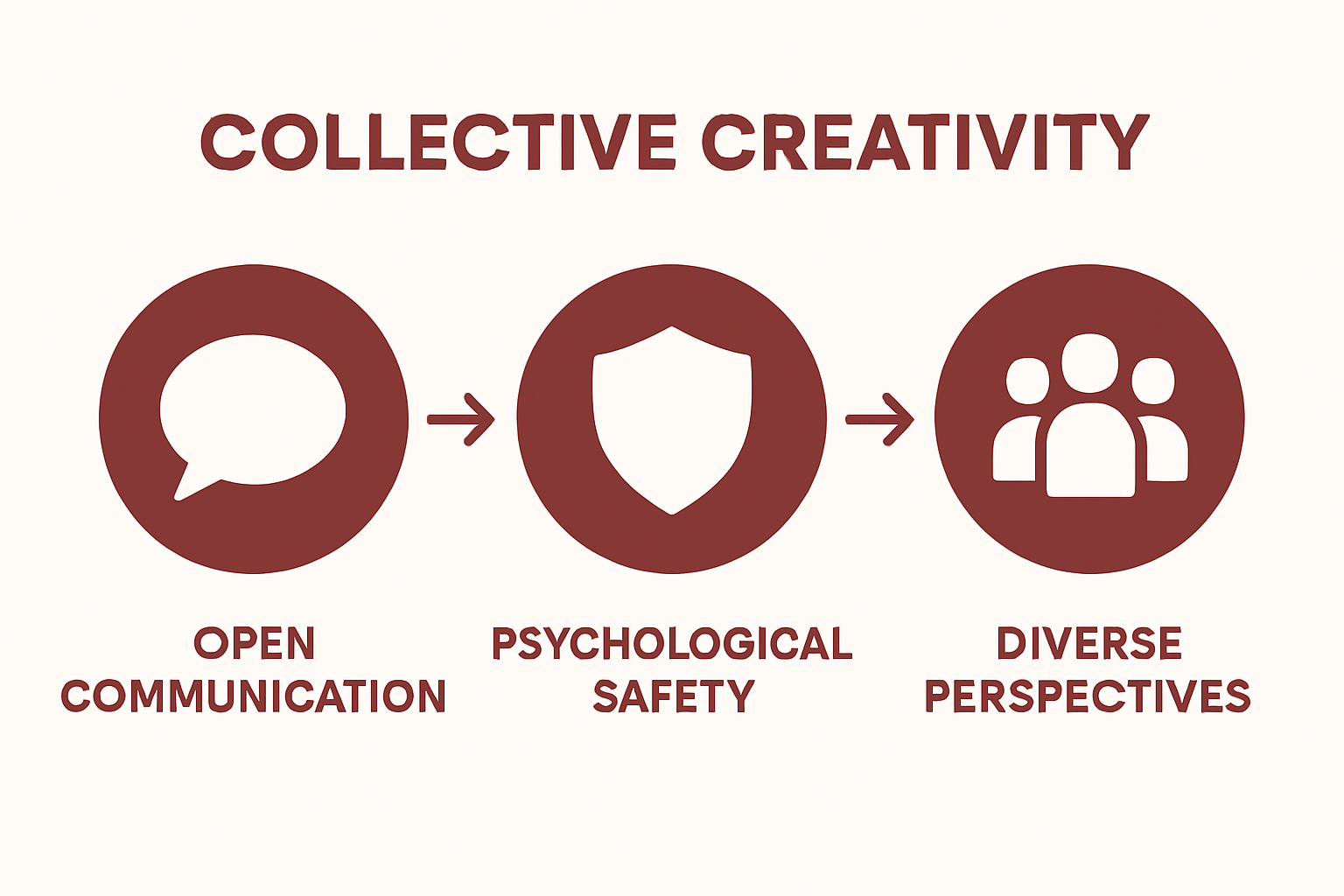
Key characteristics of effective creative collaboration include:
-
Open communication: Encouraging transparent and judgment-free dialogue
-
Psychological safety: Creating an environment where team members feel comfortable sharing unconventional ideas
-
Diverse perspectives: Bringing together individuals with different backgrounds, expertise, and thinking styles
The Transformative Potential
Creative collaboration goes beyond traditional teamwork by focusing on collective intelligence and emergent thinking. When teams truly collaborate creatively, they can generate solutions that no single individual could develop alone. This approach recognizes that innovation is not a linear process but a complex, interconnected journey of exploration and discovery.
In practice, creative collaboration requires deliberate design of interaction spaces, processes that encourage divergent thinking, and a culture that values experimentation over perfect execution. Teams must be willing to embrace uncertainty, challenge existing assumptions, and view potential failures as valuable learning opportunities.
The Importance of Creative Collaboration in Teams
Creative collaboration transforms team dynamics from traditional task completion to a powerful mechanism for generating breakthrough solutions and driving organizational innovation. By leveraging collective intelligence, teams can overcome complex challenges that would be insurmountable for individual contributors.
Unlocking Organizational Potential
Research from Harvard Business Review demonstrates that teams practicing intentional creative collaboration consistently outperform groups operating through conventional hierarchical structures. Effective collaboration is not just a nice to have strategy, but a critical competitive advantage in today’s rapidly evolving business landscape.
The strategic benefits of creative collaboration include:
-
Accelerated problem solving through diverse perspectives
-
Enhanced innovation potential by combining unique skill sets
-
Increased employee engagement and organizational resilience
Driving Competitive Advantage
Creative collaboration enables organizations to tap into their most valuable resource: collective human potential. By creating environments that encourage open communication, psychological safety, and interdisciplinary thinking, teams can generate solutions that transcend traditional boundaries of expertise.
Successful creative collaboration requires more than just good intentions. It demands deliberate structural and cultural investments that prioritize knowledge sharing, mutual respect, and continuous learning. Teams must cultivate an ecosystem where diverse thinking is not just tolerated, but actively celebrated and integrated into organizational strategy.
How Creative Collaboration Enhances Innovation
Innovation is not a solitary pursuit but a dynamic process fueled by collective creativity, diverse perspectives, and collaborative thinking. Creative collaboration serves as a powerful catalyst that transforms individual insights into groundbreaking solutions that reshape industries and solve complex challenges.
The Neuroscience of Collaborative Innovation
Neurological research from Stanford University reveals that collaborative environments trigger neurochemical responses that enhance cognitive flexibility and creative thinking. When team members engage in open, supportive dialogue, their brains actually become more receptive to novel ideas and unconventional problem solving approaches.
Key neurological benefits of collaborative innovation include:
-
Increased dopamine release promoting motivation and creative exploration
-
Enhanced neural connectivity across different brain regions
-
Reduced cognitive stress through shared cognitive load
Breaking Traditional Innovation Barriers
Creative collaboration disrupts traditional innovation models by challenging established thought patterns and creating space for emergent thinking. Unlike linear innovation processes, collaborative approaches embrace uncertainty and view challenges as opportunities for collective discovery.
Successful collaborative innovation requires intentional design of interaction spaces that encourage psychological safety, respect for diverse perspectives, and a culture of experimental thinking. Teams must move beyond hierarchical structures and create environments where every voice is valued, and unconventional ideas are seen as potential pathways to transformative solutions.
Key Concepts in Creative Teamwork
Creative teamwork transcends traditional collaboration by establishing a comprehensive framework that enables groups to generate innovative solutions through strategic interaction and mutual understanding. It represents a sophisticated approach to collective problem solving that requires intentional design and nuanced interpersonal dynamics.
Foundational Elements of Effective Collaboration
Psychological research from American Psychological Association highlights that successful creative teamwork hinges on creating an environment of psychological safety where team members feel empowered to share unconventional ideas without fear of judgment. The quality of team interactions matters more than individual talent.
Core foundational elements include:
-
Mutual respect and genuine curiosity about diverse perspectives
-
Willingness to challenge assumptions constructively
-
Commitment to collective learning and growth
Developing Collaborative Intelligence
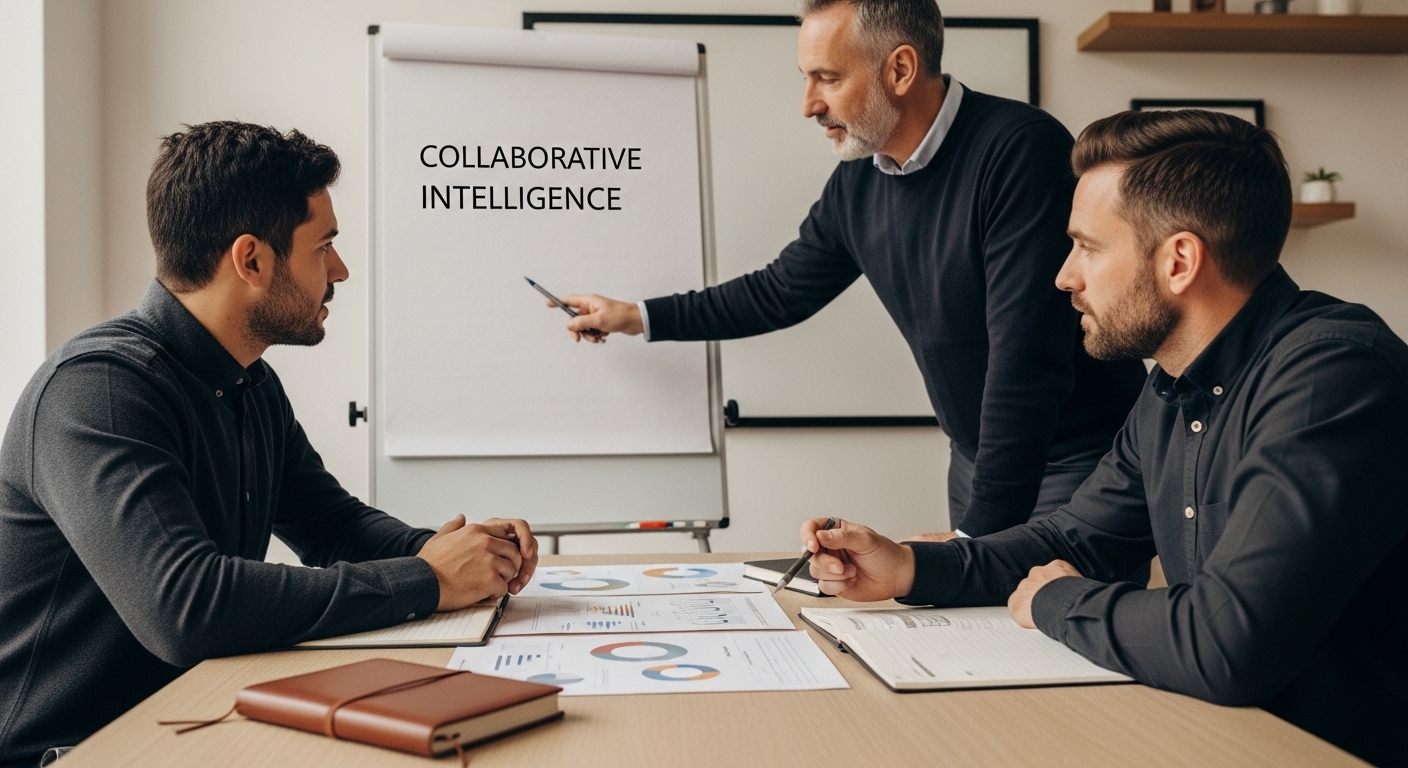
Collaborative intelligence represents the team’s capacity to generate insights that exceed individual cognitive capabilities. This concept goes beyond traditional teamwork by emphasizing synergistic thinking, where the collective output is exponentially more powerful than individual contributions.
Successful creative teamwork requires continuous cultivation of trust, communication skills, and adaptive thinking. Teams must develop mechanisms that encourage open dialogue, create space for experimental thinking, and transform potential conflicts into opportunities for deeper understanding and innovation.
Challenges and Solutions in Creative Collaboration
Creative collaboration, while powerful, is not without significant challenges. Teams must navigate complex interpersonal dynamics, communication barriers, and structural obstacles that can potentially derail collaborative efforts and innovative potential.
Identifying Collaborative Roadblocks
Research from organizational psychology studies reveals that most collaborative challenges stem from systemic issues rather than individual shortcomings. Recognizing these barriers is the first critical step toward creating more effective teamwork environments.
Common collaborative challenges include:
-
Hierarchical structures that stifle open communication
-
Unequal power dynamics between team members
-
Resistance to sharing ideas and potential vulnerability
-
Cultural and communication style differences
Strategic Intervention Approaches
Overcoming collaborative challenges requires intentional, structured interventions that transform potential barriers into opportunities for growth. Successful teams develop adaptive strategies that create psychological safety, establish clear communication protocols, and cultivate a culture of mutual respect.
Effective solutions involve creating flexible frameworks that allow for open dialogue, rotating leadership responsibilities, and implementing transparent decision making processes. Teams must also invest in developing emotional intelligence, active listening skills, and the ability to navigate constructive conflict.
This table summarizes the most common challenges faced in creative collaboration and effective solutions to address each barrier, helping teams transform obstacles into opportunities for growth.
| Collaborative Challenge | Description | Effective Solution |
| Hierarchical structures | Rigid roles prevent open communication | Implement rotating leadership, flatten hierarchies |
| Unequal power dynamics | Imbalances discourage participation | Foster mutual respect, equitable decision making |
| Resistance to sharing ideas | Fear of vulnerability or judgment | Build psychological safety, reward idea sharing |
| Cultural and communication style differences | Misunderstandings due to varied backgrounds | Encourage dialogue, train on inclusive practices |
| Structural obstacles | Outdated processes and silos hinder collaboration | Create flexible frameworks, reassess workflows |
Ready to Break Free from Collaboration Roadblocks?
If you are frustrated by endless meetings, stifling office silos, or a lack of real progress despite all your creative teamwork efforts, you are not alone. This article highlights common collaboration challenges like hierarchical barriers, limited psychological safety, and the struggle to spark real innovation. If you are seeking a tangible way to put creative collaboration principles into action and reignite your team’s energy, The Nest is designed specifically for you.
Now is the time to swap routine spaces for intentional experiences. At The Nest, teams reconnect, engage in hands-on workshops, and experience immersive group activities built around collective intelligence and psychological safety. Discover how thoughtfully designed retreats and strategy sessions can transform your team dynamic for lasting results. Visit The Nest to start planning your next team escape and unlock your team’s full creative potential.
Frequently Asked Questions
What is creative collaboration?
Creative collaboration is a dynamic process where individuals from diverse backgrounds and skill sets come together to generate innovative solutions through shared knowledge and collective thinking.
Why is creative collaboration important for teams?
Creative collaboration transforms team dynamics and enables organizations to leverage collective intelligence, leading to accelerated problem solving, enhanced innovation, and increased employee engagement.
How does creative collaboration enhance innovation?
Creative collaboration enhances innovation by fostering collective creativity, enabling diverse perspectives, and allowing teams to turn individual insights into groundbreaking solutions.
What are some challenges in creative collaboration?
Some common challenges include hierarchical structures that stifle communication, unequal power dynamics, and resistance to sharing ideas. Recognizing these barriers is crucial for creating effective teamwork environments.
Recommended
-
Fostering Team Collaboration for Powerful Results With Adobe Solutions –