
Team workshops are changing how groups connect and create results at work. Well-designed team workshops can significantly boost team cohesion and even improve overall organizational performance according to MIT Sloan Management Review. Most think workshops are just longer meetings with a few more activities thrown in. The truth is the right workshop can deliver breakthroughs that regular meetings never even come close to.
The table below summarizes the key characteristics that distinguish team workshops from traditional meetings, helping clarify their unique value within organizations.
| Aspect | Team Workshops | Traditional Meetings |
| Structure | Carefully planned, with structured activities | Often loosely structured |
| Goal Orientation | Focused on specific objectives and team development | Frequently status updates or routine |
| Interaction Level | Highly interactive and collaborative | Mostly passive or report-based |
| Skill Development | Emphasizes learning, growth, and exploration | Limited learning opportunities |
| Outcome | Breakthroughs, innovation, team cohesion | Decisions, task assignments |
What Are Team Workshops and Their Purpose?
Team workshops are strategic collaborative sessions designed to enhance group performance, communication, and collective problem solving. These intentional gatherings bring teams together to explore specific objectives, develop skills, and create meaningful interactions that transcend typical workplace dynamics.
Understanding the Core Concept
At their essence, team workshops represent carefully structured experiences that move beyond routine meetings. Unlike standard conference room discussions, these sessions are meticulously planned environments where participants engage in interactive learning, skill development, and collective exploration. Research from MIT Sloan Management Review suggests that well-designed workshops can significantly improve team cohesion and organizational performance.
Workshops typically focus on several key dimensions:
- Skill enhancement and professional development
- Problem solving and strategic thinking
- Team bonding and interpersonal relationship building
- Innovation and creative exploration
Transformative Benefits of Team Workshops
The benefits of team workshops extend far beyond simple training exercises. They create powerful opportunities for organizational growth by addressing multiple dimensions of team effectiveness. When designed thoughtfully, these sessions can unlock potential that traditional work environments often suppress.
Organizational Psychology Research demonstrates that structured workshops help teams develop:
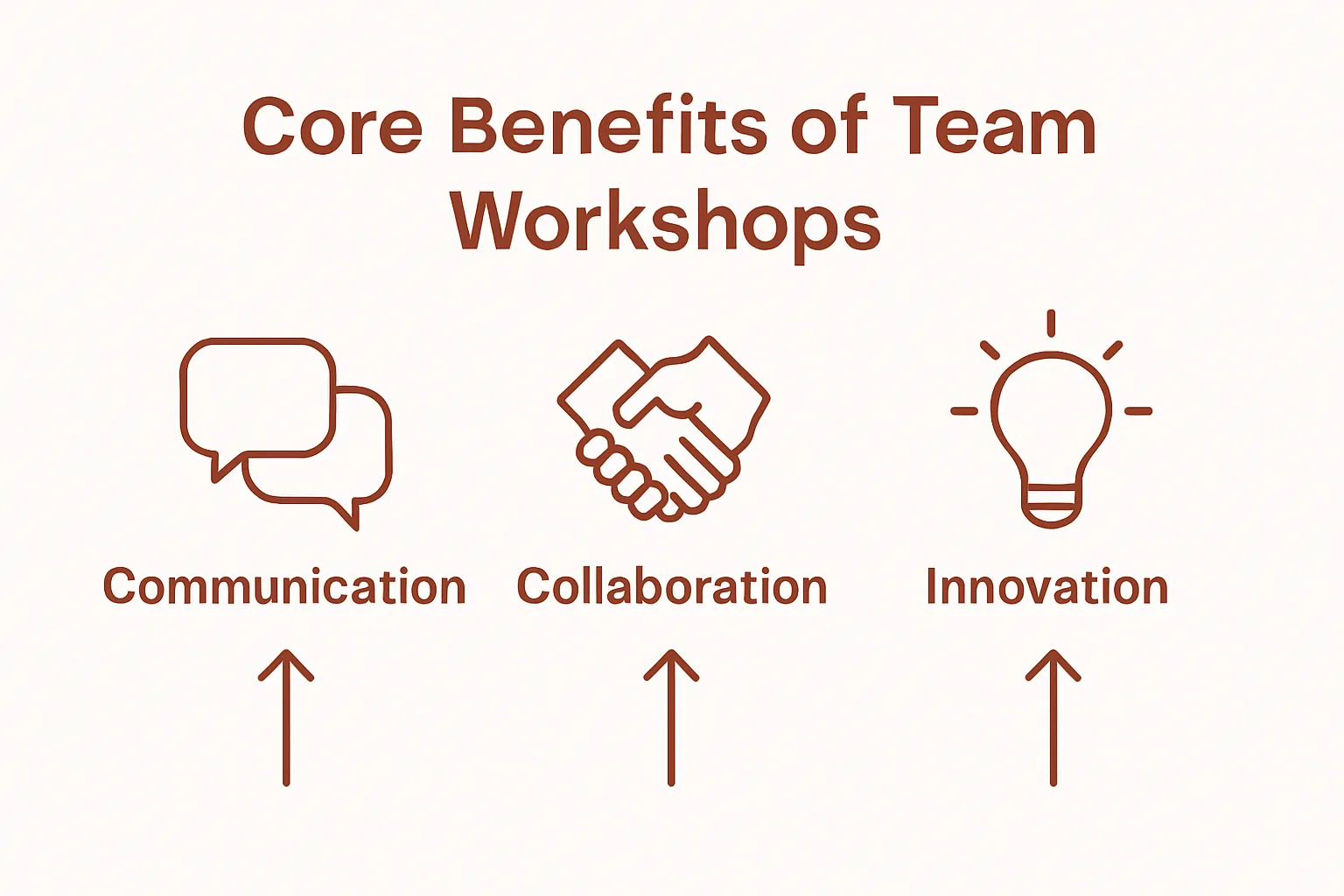
- Enhanced communication strategies
- Deeper mutual understanding
- Improved collaborative capabilities
By providing a dedicated space for open dialogue, experiential learning, and collective reflection, team workshops enable groups to transcend conventional workplace limitations. They offer a unique platform where team members can step outside daily operational pressures and engage in meaningful, transformative interactions that drive organizational success.
The Importance of Collaboration in Remote Teams
Collaboration has become a critical lifeline for remote teams, transforming how organizations operate and connect in an increasingly digital workplace. As geographical barriers dissolve, the ability to work effectively across virtual environments becomes a fundamental skill for modern professionals.
Understanding Virtual Team Dynamics
Remote collaboration is more than just technology connecting people. It represents a complex ecosystem of communication, trust, and shared goals that require intentional strategies to maintain team cohesion. Research from Stanford University reveals that successful remote teams develop unique communication protocols and emotional intelligence to bridge physical distance.
Key characteristics of effective remote collaboration include:
- Proactive and transparent communication
- Clear and consistent goal alignment
- Regular virtual interaction and engagement
- Mutual accountability and trust
- Flexibility and adaptability
Building Stronger Connection Through Technology
Modern collaboration tools have revolutionized how remote teams interact, providing sophisticated platforms that simulate in-person interactions. These technologies go beyond simple video conferencing, offering integrated spaces for real-time document sharing, project management, and spontaneous digital interactions.
Organizational Behavior Research demonstrates that teams using advanced collaborative technologies experience:
- Enhanced problem solving capabilities
- Increased team psychological safety
- Higher levels of interpersonal trust
- More efficient workflow management
Successful remote collaboration requires a deliberate approach that combines technological tools, emotional intelligence, and strategic communication. By creating intentional spaces for connection, remote teams can transform geographical separation into an opportunity for innovative and dynamic teamwork.
The following table outlines essential characteristics that contribute to effective remote team collaboration and distinguishes them from general in-person teamwork dynamics.
| Collaboration Factor | Effective Remote Teams | In-Person Teams |
| Communication | Proactive, transparent, protocol-based | Often informal and spontaneous |
| Goal Alignment | Requires explicit clarity and alignment | Naturally emerges in shared environment |
| Interaction Frequency | Requires scheduling and intention | More frequent, organic interactions |
| Trust Building | Needs deliberate strategies | Built through daily proximity |
| Technology Dependence | Critical (tools & platforms essential) | Supplementary (often face-to-face) |
How Team Workshops Foster Innovation and Problem-Solving
Team workshops serve as powerful catalysts for transforming organizational creativity and strategic thinking. They provide structured environments where traditional workplace barriers dissolve, enabling teams to explore innovative solutions and tackle complex challenges through collaborative approaches.
Creating Psychological Safety for Creative Exploration
Innovation thrives when team members feel safe to share unconventional ideas without fear of judgment. Psychological Research from Google demonstrates that psychological safety is the most critical factor in high-performing teams, directly influencing their capacity for creative problem solving.
Key elements that establish psychological safety during workshops include:
- Encouraging open and non-judgmental dialogue
- Valuing diverse perspectives
- Promoting experimental thinking
- Celebrating learning from failures
- Creating inclusive participation opportunities
Structured Approaches to Problem-Solving
Team workshops introduce systematic methodologies that guide groups through complex problem solving. These structured approaches replace traditional linear thinking with dynamic, collaborative techniques that unlock collective intelligence.
Innovation Management Research indicates that strategic workshops help teams:
- Break down complex problems into manageable components
- Generate multiple solution perspectives
- Challenge existing assumptions
- Develop rapid prototyping skills
- Create actionable implementation strategies
By providing dedicated spaces for creative exploration, team workshops transform potential organizational obstacles into opportunities for breakthrough thinking. These sessions move beyond traditional brainstorming, creating intentional environments where collective creativity can flourish and innovative solutions can emerge.

The Impact of Team Workshops on Employee Engagement
Employee engagement represents a critical organizational asset that directly influences productivity, retention, and overall workplace performance. Team workshops emerge as powerful instruments for cultivating deeper connections, motivation, and commitment within professional environments.
Understanding Employee Engagement Dynamics
Engagement transcends traditional workplace satisfaction. It encompasses an emotional and intellectual commitment where employees feel genuinely invested in their organization’s success. Gallup Workplace Research reveals that meaningful collaborative experiences significantly enhance an individual’s connection to their workplace.
Core dimensions of workplace engagement include:
- Emotional investment in organizational goals
- Intrinsic motivation beyond financial compensation
- Sense of personal contribution and purpose
- Feeling valued and recognized
- Opportunities for professional growth
Transformative Potential of Collaborative Experiences
Team workshops provide structured environments that go beyond routine training. They create intentional spaces where employees can develop deeper interpersonal connections, explore collective potential, and experience organizational culture more intimately.
Organizational Psychology Research demonstrates that strategic team interventions help organizations:
- Strengthen interpersonal relationships
- Improve communication effectiveness
- Reduce workplace isolation
- Enhance mutual understanding
- Create shared emotional experiences
By designing workshops that prioritize genuine interaction and meaningful exploration, organizations can transform employee engagement from a passive concept into an active, dynamic organizational strategy. These experiences become catalysts for building more connected, motivated, and resilient workplace cultures.
Real-World Examples of Successful Team Workshops
Real-world team workshops demonstrate how strategic collaborative experiences can transform organizational performance, culture, and problem solving capabilities across diverse industries. These practical examples illuminate the profound impact of intentional, well-designed team development initiatives.
Healthcare Innovation and Safety Training
Medical Research Insights reveal how targeted team workshops dramatically improve critical workplace outcomes. In one prominent hospital system, clinical staff participated in simulation-based workshops that enhanced communication protocols and patient safety strategies. These workshops created immersive learning environments where medical professionals could practice complex collaborative scenarios, leading to measurable improvements in team coordination and risk management.
Key characteristics of successful healthcare workshops include:
- Realistic scenario simulation
- Interactive skill development
- Comprehensive communication training
- Error analysis and learning techniques
- Interdisciplinary collaboration
Technology Sector Collaborative Transformation
Technology companies have pioneered innovative workshop approaches that drive organizational agility and creative problem solving. Companies like Google and Spotify have developed unique workshop methodologies that encourage cross-functional collaboration, rapid prototyping, and experimental thinking.
Elements that define effective technology sector workshops:
- Emphasis on experimental learning
- Breaking traditional hierarchical barriers
- Encouraging radical transparency
- Promoting continuous learning
- Celebrating innovative thinking
These real-world examples demonstrate that successful team workshops are not generic training experiences. They represent sophisticated organizational interventions designed to unlock collective potential, transform workplace dynamics, and create environments where innovation can flourish. By moving beyond traditional training models, these workshops become powerful catalysts for meaningful organizational change.
Move Beyond Routine: Transform Your Team’s Potential with The Nest
Are endless meetings and lack of connection holding your team back from real innovation and engagement? The article “Understanding the Benefits of Team Workshops” explains how workshops can reignite creativity, foster collaboration, and solve entrenched problems. Yet, your team deserves more than theory, they need a space where these benefits come alive. At The Nest, your team experiences hands-on workshops, strategic retreats, and immersive group experiences that go far beyond ordinary office sessions. Every aspect is designed to help you break through bureaucracy, build stronger relationships, and spark meaningful change.
Ready to move from knowing about effective teams to feeling and achieving it? Take action now and elevate your next retreat, workshop, or strategy session with a fully immersive environment at The Nest. Discover how intentional experiences can shape lasting results. Visit The Nest and start creating a more connected, energized, and high-performing team today.
Frequently Asked Questions
What are the core objectives of team workshops?
Team workshops aim to enhance skill development, foster problem-solving abilities, build team cohesion, and encourage innovation and creative exploration within groups.
How do team workshops improve communication among remote teams?
Team workshops create structured environments for open dialogue, promote proactive communication strategies, and help establish trust and accountability, which are essential for effective remote collaboration.
What role does psychological safety play in team workshops?
Psychological safety is crucial in team workshops as it allows participants to share unconventional ideas without fear of judgment, fostering a culture of open communication and encouraging innovative thinking.
Can team workshops boost employee engagement?
Yes, team workshops can significantly enhance employee engagement by creating meaningful collaborative experiences that foster deeper interpersonal connections and a sense of personal contribution to organizational goals.