
Teams thrive when people connect, yet building real bonds takes more than a few icebreakers and group chats. Research shows that structured team-building activities can significantly boost group performance. Most teams assume trust and collaboration just happen with time, but often the real progress starts with an honest look at how your team actually works together. The big surprise? The strongest connections grow when you treat relationships as a skill you can measure, shape, and refine step by step.
Step 1: Assess Your Current Team Dynamics
Understanding your team’s current dynamics is the crucial foundation for building stronger connections. This initial step involves a comprehensive evaluation of how your team currently interacts, communicates, and collaborates. Team connection step by step begins with honest introspection and a willingness to examine existing relationship patterns objectively.
Start by creating a safe environment for transparent communication. This means scheduling a dedicated meeting where team members can share their perspectives without fear of judgment or repercussions. Approach this assessment as a collaborative diagnostic process, not a critique. Your goal is to gain insights into communication styles, interpersonal challenges, and potential areas of improvement.
To conduct an effective assessment, consider using a combination of methods. Anonymous surveys can provide candid feedback about team interactions. Include questions that explore communication frequency, perceived trust levels, collaboration effectiveness, and individual comfort with current team dynamics. Ask team members to rate their experiences and provide open-ended comments about team relationships.
In addition to surveys, conduct individual and group discussions. These conversations should focus on understanding individual perspectives, communication preferences, and potential barriers to effective teamwork. Pay attention to both verbal and non-verbal cues during these interactions. Some team members might be more reserved, so create multiple channels for expressing their thoughts.
Key assessment areas should include:
- Communication patterns and frequency
- Trust and psychological safety levels
- Collaboration effectiveness
- Perceived team strengths and challenges
- Individual and collective motivation
After gathering data, analyze the results collectively. Look for patterns, recurring themes, and potential areas of improvement. This process is not about assigning blame but about creating a shared understanding of your team’s current state. The insights gained will serve as a roadmap for developing more robust team connections and strategies for enhanced collaboration.
The table below provides a concise overview of each step in the team connection process, highlighting its focus and expected key outcome.
| Step | Focus Area | Key Outcome |
| 1 | Assess Current Team Dynamics | Clear understanding of team relationships |
| 2 | Identify Connection Goals and Objectives | SMART connection goals and ownership |
| 3 | Develop a Structured Connection Plan | Actionable strategies with timelines |
| 4 | Implement Team Connection Activities | Engagement and relationship-building |
| 5 | Gather Feedback and Measure Impact | Insightful evaluation and measurable data |
| 6 | Adjust Strategies for Continuous Improvement | Responsive improvements and adaptability |
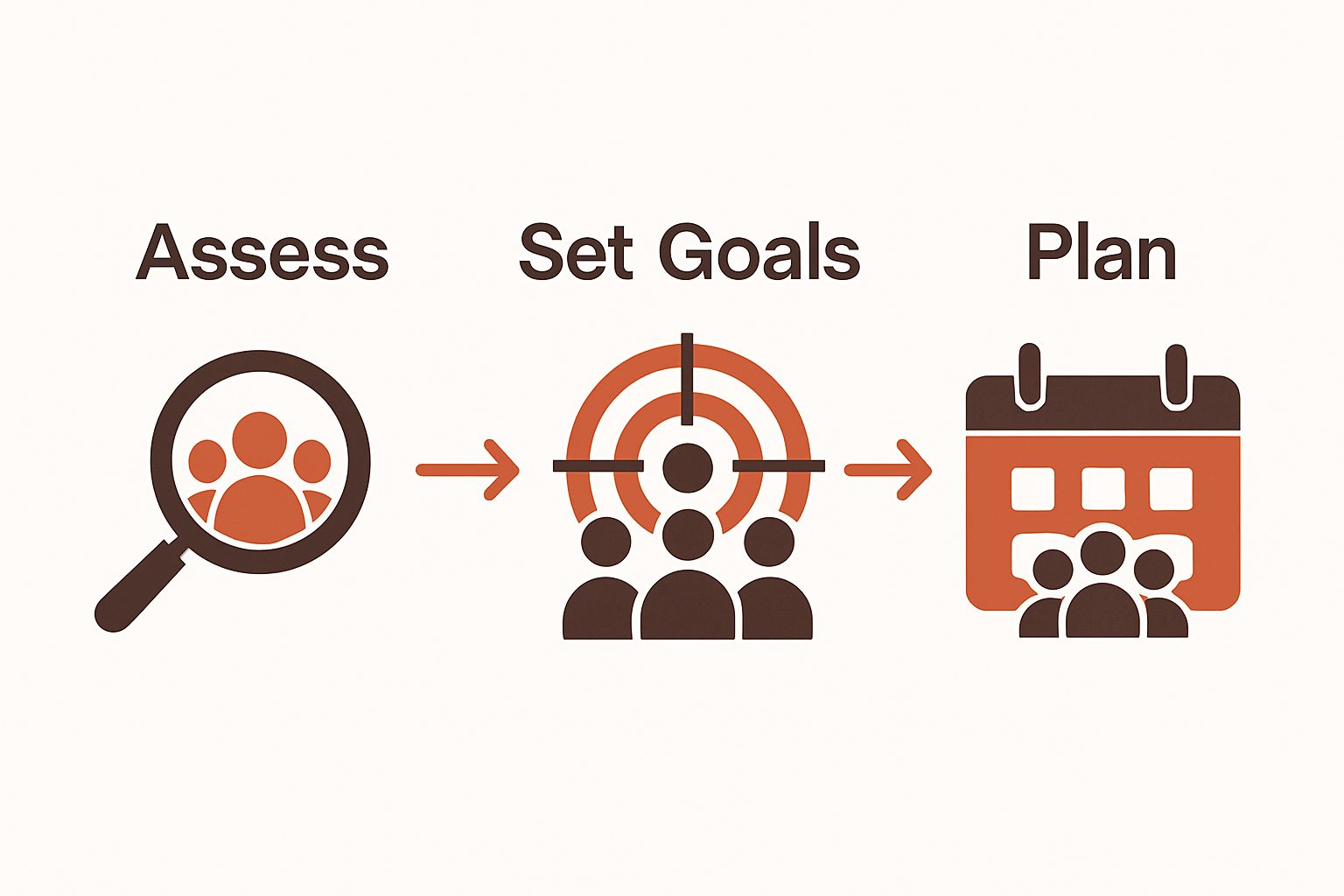
Successful completion of this step means having a clear, comprehensive view of your team’s current interpersonal dynamics, documented insights, and a collective commitment to improvement.
Step 2: Identify Connection Goals and Objectives
After assessing your team’s current dynamics, the next critical step in team connection involves setting clear, meaningful goals that transform insights into actionable objectives. Team connection step by step requires intentional planning and strategic vision. This stage is about translating your initial assessment into a focused roadmap for strengthening team relationships and collaborative capabilities.
Begin by hosting a collaborative goal-setting workshop where every team member contributes their perspective. During this session, encourage open dialogue about what improved team connection means to each individual. Some team members might prioritize more transparent communication, while others might emphasize building deeper interpersonal trust. The key is finding common ground that resonates with the entire team.
According to Project Management Institute, effective team connection goals should be specific, measurable, achievable, relevant, and time-bound (SMART). This framework helps transform abstract desires into concrete objectives. For instance, instead of a vague goal like “improve communication,” develop a specific target such as “conduct weekly cross-functional feedback sessions where each team member shares one collaborative success and one area for potential improvement.”
Consider developing goals across multiple dimensions of team connection. These might include:
- Enhancing communication frequency and quality
- Building psychological safety
- Developing shared understanding of team values
- Improving conflict resolution skills
- Creating opportunities for informal team interactions
Prioritize goals that address the most significant gaps revealed in your initial team dynamics assessment. This ensures your connection strategy is responsive to actual team needs rather than theoretical best practices. Involve team members in voting or ranking these objectives to ensure collective buy-in and commitment.
Verify successful goal identification by checking for team-wide agreement, clarity of objectives, and a shared sense of excitement about potential improvements. Each goal should have a designated owner responsible for tracking progress and facilitating implementation. The most successful team connection strategies emerge from collaborative design and shared ownership of the transformation process.
Step 3: Develop a Structured Connection Plan
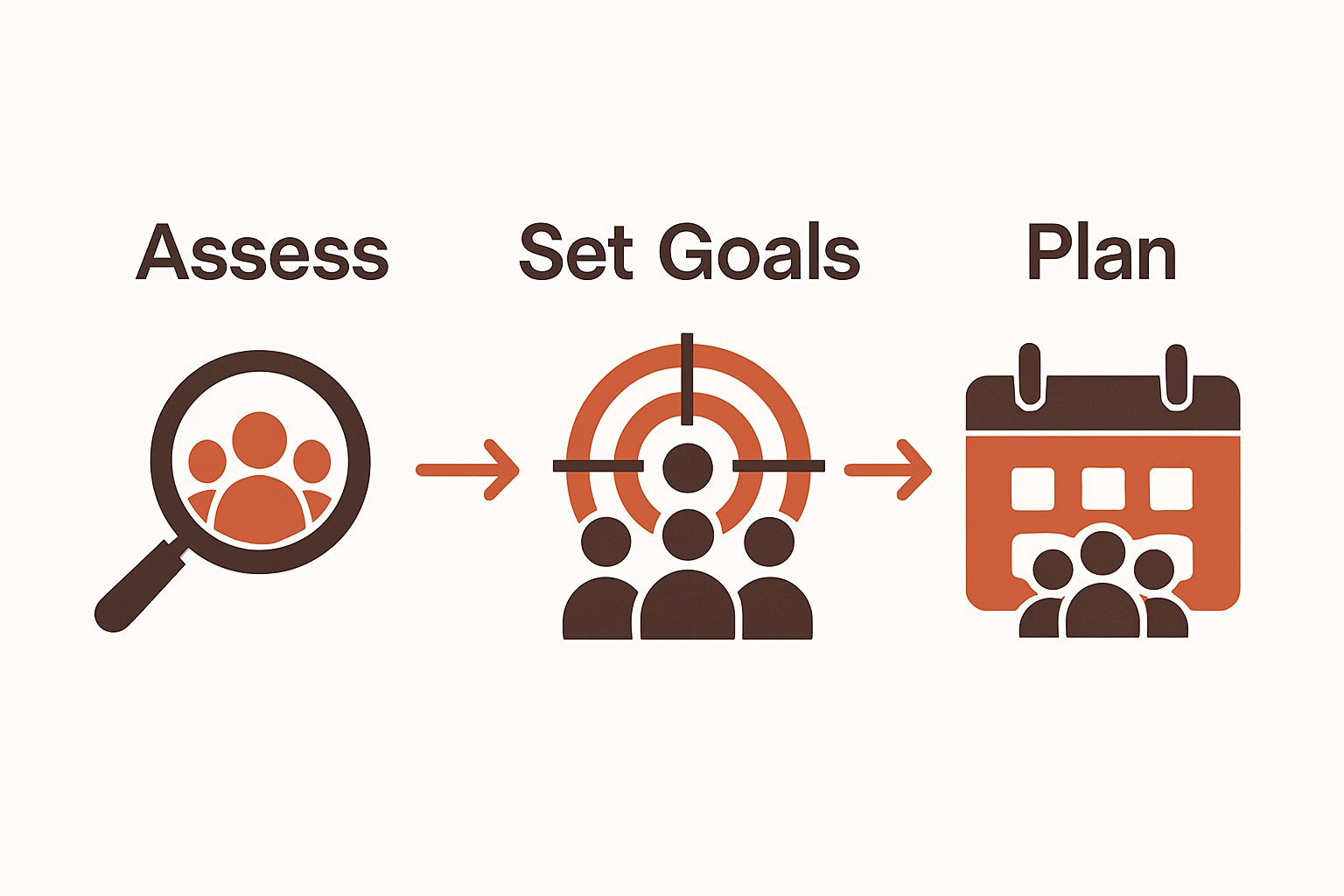
With your team connection goals clearly defined, the next crucial phase involves crafting a comprehensive and strategic implementation plan. Team connection step by step requires meticulous planning and thoughtful execution. This structured approach transforms abstract objectives into concrete, actionable strategies that will systematically enhance team relationships and collaborative dynamics.
Begin by creating a detailed roadmap that breaks down your connection goals into specific, manageable initiatives. Each initiative should have clear timelines, responsible team members, required resources, and measurable outcomes. Think of this plan as a living document that will guide your team’s connection journey while remaining flexible enough to adapt to emerging needs and insights.
According to Harvard Business Review, successful team connection plans integrate both structured activities and organic interaction opportunities. This means balancing formal team-building exercises with more spontaneous, low-pressure engagement methods. Consider designing a multi-dimensional approach that includes professional development workshops, collaborative projects, informal social interactions, and regular feedback mechanisms.
Your connection plan should encompass various engagement strategies:
- Structured team workshops focusing on communication skills
- Regular peer feedback and recognition sessions
- Cross-functional project collaborations
- Informal virtual or in-person social gatherings
- Mentorship and knowledge-sharing programs
Critically, your plan must remain adaptable and responsive to the team’s evolving dynamics. Schedule periodic plan reviews where team members can provide input, share observations, and suggest modifications. This approach ensures the connection strategy remains relevant and continues to address the team’s changing needs.
Verify the plan’s effectiveness by establishing clear metrics and check-in points. These might include quarterly team sentiment surveys, tracking collaboration metrics, monitoring communication quality, and assessing overall team performance. The most successful connection plans are those that view team bonding as an ongoing, iterative process of continuous improvement and mutual understanding.
Step 4: Implement Team Connection Activities
Implementing team connection activities transforms your strategic plan into tangible experiences that build genuine relationships. Team connection step by step requires thoughtful, intentional engagement that goes beyond traditional team-building exercises. This stage is about creating meaningful interactions that foster trust, understanding, and collaborative spirit.
Start by introducing activities that balance professional development with personal connection. These experiences should feel organic and enjoyable, not forced or contrived. Consider designing a mix of virtual and in-person activities that accommodate different team member preferences and work arrangements. The goal is to create inclusive experiences that allow every team member to participate and feel valued.
According to National Institutes of Health research, facilitated team-building activities significantly improve group dynamics and performance. Implement structured yet flexible activities that encourage genuine interaction. These might include collaborative problem-solving challenges, storytelling sessions where team members share personal and professional experiences, or skill-sharing workshops where individuals teach each other unique talents or insights.
Consider incorporating activities that address multiple connection dimensions:
- Skill-based learning exchanges
- Collaborative problem-solving challenges
- Personal narrative and experience sharing
- Creative team projects
- Mutual support and mentorship opportunities
Create a supportive environment that celebrates vulnerability and authentic communication. This means designing activities that encourage team members to share beyond surface-level interactions. Use icebreakers, reflection exercises, and guided discussions that help individuals understand each other’s motivations, challenges, and strengths.
Verify the effectiveness of your connection activities by observing increased team engagement, improved communication quality, and a noticeable shift in team dynamics. Look for signs of enhanced trust, more open dialogue, and a sense of collective purpose. The most successful implementation recognizes that team connection is an ongoing journey of mutual understanding and continuous relationship building.
Step 5: Gather Feedback and Measure Impact
Measuring the effectiveness of your team connection efforts is crucial for continuous improvement and sustained team growth. Team connection step by step requires systematic evaluation and thoughtful reflection. This stage transforms your connection initiatives from isolated activities into a strategic, data-driven approach to team development.
Begin by designing a comprehensive feedback mechanism that captures both quantitative and qualitative insights. This means creating surveys, conducting structured interviews, and organizing dedicated reflection sessions that allow team members to share their genuine experiences. The goal is to create a safe, open environment where individuals can provide honest feedback without fear of negative consequences.
According to National Institutes of Health research, effective team feedback mechanisms should incorporate multiple data collection methods. Develop a multi-dimensional assessment approach that examines various aspects of team connection, including communication quality, trust levels, collaborative effectiveness, and individual team member experiences.
Consider tracking the following key metrics:
- Team communication frequency and quality
- Perceived psychological safety
- Collaboration effectiveness
- Individual engagement levels
- Interpersonal relationship satisfaction
Create a transparent process for sharing and acting on feedback, transforming data collection into a meaningful dialogue. This means not just gathering information but actively discussing results, acknowledging challenges, and collaboratively developing improvement strategies. Encourage open dialogue where team members feel empowered to suggest modifications and contribute to the team’s ongoing development.
Verify the impact of your team connection efforts by looking for tangible changes in team dynamics. Signs of success include increased voluntary collaboration, more constructive conflict resolution, improved problem-solving capabilities, and a noticeable enhancement in overall team morale. Remember that team connection is an iterative process, and each feedback cycle provides an opportunity for deeper understanding and more refined connection strategies.
Step 6: Adjust Strategies for Continuous Improvement
Continuous improvement is the cornerstone of sustainable team connection, transforming initial efforts into a dynamic, evolving process of relationship building. Team connection step by step requires ongoing adaptation and responsive strategy refinement. This final step is about creating a flexible framework that can adjust to changing team dynamics, emerging challenges, and evolving organizational needs.
Initiate the improvement process by conducting a comprehensive review of your previous feedback and measurement results. Approach this review with an open mind, recognizing that not every strategy will yield perfect results on the first attempt. Analyze the data collected from your feedback mechanisms, identifying both successful interventions and areas that require significant modification.
According to National Institutes of Health research, successful teams maintain adaptability through regular strategic reassessment. This means creating a culture of continuous learning where team members feel empowered to suggest improvements and experiment with new connection approaches. Develop a collaborative process for strategy adjustment that involves input from all team members, ensuring that everyone has a voice in shaping the team’s connection journey.
Consider implementing the following adjustment strategies:
- Rotating leadership in connection initiatives
- Experimenting with new team-building formats
- Creating cross-functional project teams
- Introducing periodic skill exchange programs
- Developing personalized connection pathways
Embrace a mindset of experimentation and curiosity, recognizing that team connection is not a one-size-fits-all approach. Some strategies will work brilliantly, while others might require significant refinement. The key is to maintain flexibility, remain open to feedback, and view each iteration as an opportunity for deeper understanding and more meaningful team interactions.
Verify the effectiveness of your adjustment process by monitoring ongoing team engagement, tracking improvements in collaborative metrics, and maintaining an open dialogue about team dynamics. The most successful teams view connection as an ongoing journey of mutual discovery, where each challenge becomes an opportunity for growth and deeper understanding.
The following table organizes key verification criteria mentioned throughout each major step, helping you assess successful completion as you progress.
| Step | Verification Criteria |
| Assess Current Team Dynamics | Documented insights; team commitment to improvement |
| Identify Connection Goals and Objectives | Team-wide agreement; clear, SMART objectives; shared excitement |
| Develop a Structured Connection Plan | Clear metrics; review points; adaptable plan |
| Implement Team Connection Activities | Increased engagement; improved communication; stronger trust |
| Gather Feedback and Measure Impact | Actionable feedback; noticeable improvement in team dynamics |
| Adjust Strategies for Continuous Improvement | Ongoing engagement; positive changes in collaboration metrics |
Turn Team Connection Into Real Results With The Nest
After reading about the step-by-step approach to building stronger team bonds, you know how crucial it is to move from theory to experience. Many teams struggle with trust, collaboration barriers, and ineffective communication. Even after carefully assessing dynamics and setting clear connection goals, the real challenge is putting those intentions into action in a way that brings lasting change. At The Nest, we offer more than advice, we provide transformative environments where your team can practice everything discussed in the Team Connection Step by Step: Build Stronger Bonds article. Our approach turns feedback, structured plans, and real connection activities into meaningful engagement, away from bureaucracy and routine.
Frequently Asked Questions
How can I assess my team’s current dynamics?
Start by creating a safe environment for open communication, conducting anonymous surveys, and holding individual and group discussions to evaluate how the team interacts and collaborates.
What are SMART goals in the context of team connections?
SMART goals are specific, measurable, achievable, relevant, and time-bound objectives that help turn abstract ideas about improving team connections into concrete and actionable plans.
What types of activities should I implement to enhance team connections?
Consider a mix of structured professional development workshops, informal social gatherings, skill-sharing sessions, and collaborative problem-solving challenges to foster genuine relationships within the team.
How do I measure the impact of team connection activities?
You can measure the impact by designing feedback mechanisms that capture both quantitative and qualitative insights, tracking metrics such as communication frequency, trust levels, collaboration effectiveness, and overall team engagement.