
Did you know that teams with high trust and clear collaboration habits are up to 50 percent more productive than those that struggle with group dynamics? The way your team communicates, solves problems, and connects each day shapes results more than any single star performer. Discover practical steps that help any group move from confusion or friction toward authentic teamwork and ongoing success.
Step 1: Assess team dynamics and set clear intentions
In this step, you will diagnose your team’s current interaction patterns and establish a shared framework for future collaboration. Think of it like taking your team’s organizational temperature and creating a roadmap for better working relationships.
Start by scheduling an intentional team assessment session where everyone can openly discuss communication styles, decision making approaches, and current team challenges. According to research from TeamDynamics, measuring communication and execution styles helps build shared understanding.
During this session, create a safe environment where team members feel comfortable sharing honest observations. Use facilitated discussion techniques that encourage equal participation. Ask questions like: What works well in our current team interactions? Where do we experience friction? What unspoken expectations might be creating misunderstandings?
Have each team member complete a quick self assessment about their preferred communication and working style. Compare these insights collectively to identify potential areas of misalignment. Look for patterns around how decisions get made, how conflict is handled, and where communication tends to break down.
Pro Tip: Use visual tools like collaboration maps or team dynamic worksheets to make the assessment more engaging and structured.
After gathering insights, collaboratively draft a team charter that outlines your agreed communication norms, decision making processes, and shared expectations. This living document will serve as your team’s north star for future interactions.
By the end of this assessment, you will have transformed potentially vague team dynamics into a clear, mutually understood operating system. The groundwork you lay here sets the stage for more authentic, productive team collaboration.
Step 2: Design engaging group experiences for trust
In this step, you will strategically craft group experiences that transform team connections from superficial interactions to deep, meaningful relationships. Your goal is to create opportunities that naturally build psychological safety and mutual understanding.
Research shows that purposeful team building activities can significantly improve engagement and collaboration. According to TeamBuilding.lu, activities like communication workshops, creative challenges, and shared experiences help develop group identity and trust.
Start by selecting experiences that go beyond traditional icebreakers. Choose activities that reveal individual strengths, encourage vulnerability, and create shared memories. This might include collaborative problem solving challenges, creative workshops, or experiences that require collective effort and mutual support.
Consider diverse activity types that cater to different personality types and comfort levels. Some team members might thrive in outdoor adventures, while others prefer introspective creative exercises. The key is variety and inclusive design that allows everyone to participate meaningfully.
Pro Tip: Select experiences that allow team members to interact in non hierarchical ways revealing aspects of themselves beyond their professional roles.
As WoxDay research indicates, building trust requires creating environments of psychological safety where team members feel appreciated and encouraged to express ideas openly.
Remember that the most powerful trust building happens not just during the activity but in the reflection and conversation afterward. Create space for team members to share insights, personal revelations, and how the experience connected them to each other.
By intentionally designing group experiences, you are laying the groundwork for more authentic teamwork. These shared moments become the foundation of stronger professional relationships and enhanced collaborative potential.
Step 3: Facilitate interactive workshops to foster collaboration
In this step, you will transform traditional learning approaches into dynamic collaborative experiences that spark creativity and shared understanding. Your goal is to design workshops that engage participants through active learning and meaningful interaction.
According to research from Wikipedia, interactive training workshops are most effective when they prioritize self directed learning and hands on activities instead of passive lecture formats. This means creating environments where participants become active creators of knowledge rather than passive recipients.
Begin by selecting a clear workshop objective that requires collective problem solving. Design activities that compel participants to work together, share perspectives, and co create solutions. Consider structured yet flexible frameworks that allow organic collaboration to emerge.
A fascinating example comes from research on the Co Badge activity, a 90 minute collaborative workshop where participants co design data visualization badges. This approach demonstrates how playful hands on experiences can enable diverse participants to learn and create together.
Pro Tip: Structure workshops with alternating moments of individual reflection and group interaction to honor different learning styles and energy levels.
Ensure your workshop design includes multiple engagement methods. This might mean incorporating visual mapping, small group discussions, collective brainstorming, and interactive problem solving challenges. The key is keeping participants actively involved and emotionally invested in the collaborative process.
Pay special attention to creating psychological safety. Establish ground rules that encourage respectful listening, validate different perspectives, and create space for everyone to contribute. Your role is to guide the process without dominating the conversation.
By facilitating interactive workshops, you are doing more than transferring information. You are creating a living laboratory where team members learn to communicate, negotiate, and innovate together.
The skills practiced in these workshops become the foundation for more resilient and adaptive team collaboration.
Step 4: Integrate collaborative tools for ongoing connection
In this step, you will transform technology from a simple communication channel into a powerful platform for team synergy and continuous collaboration. Your goal is to select and implement tools that enhance rather than replace human connection.
According to research in Computer Supported Cooperative Work, technology can be strategically designed to support collaborative human activity. This means choosing tools that feel natural and intuitive to your team’s unique working style.
Begin by conducting a collaborative assessment of your team’s communication and workflow needs. What challenges do you currently experience? Where do information gaps or communication breakdowns occur? Look for tools that address these specific pain points while promoting transparency and shared understanding.
Modern collaboration platforms offer remarkable capabilities. As CTO Magazine highlights, tools like Figma, Jira, and Miro enable real time co creation, task tracking, prototyping, and visual brainstorming across distributed teams.
Pro Tip: Choose tools that integrate seamlessly and reduce technological friction rather than adding complexity to your workflow.
Consider implementing a central hub where project information, communication threads, and collaborative documents live. This might mean using a platform that allows real time editing, comment threads, and visual progress tracking. The key is creating a digital workspace that feels intuitive and engaging.
Encourage team members to personalize their interaction with these tools. Some will prefer visual kanban boards, others detailed task lists. Create space for individual preferences within a shared framework.
Remember that tools are most powerful when they support human connection. Regular check ins, clear communication protocols, and a culture of openness will determine your collaborative success far more than any single technological solution.
By thoughtfully integrating collaborative tools, you are building a living digital ecosystem that supports your team’s creativity, productivity, and ongoing connection.

Step 5: Evaluate outcomes and reinforce team bonds
In this step, you will transform your team building efforts from one time events into a continuous improvement journey. Your goal is to thoughtfully assess the impact of your collaborative experiences and create mechanisms for ongoing team connection and growth.
According to research from SuperGlue Games, measuring team building impact goes far beyond simple satisfaction surveys. This means developing a nuanced approach that tracks communication patterns, psychological safety, and engagement across multiple dimensions.
Begin by designing pre and post experience assessments that capture both quantitative and qualitative insights. Create surveys that invite team members to reflect deeply on their experience. Ask questions that reveal shifts in communication comfort, mutual understanding, and collaborative confidence.
Consider multiple evaluation dimensions. Look at how team members interact during meetings, observe changes in problem solving approaches, and track improvements in cross functional communication. These subtle indicators often reveal more profound transformations than traditional metrics.
Pro Tip: Make evaluation a collaborative process. Invite team members to co design assessment approaches and share their perspectives on team growth.
Schedule regular reflection sessions where team members can share personal insights about their collaborative journey. Create a safe space for honest conversations about what is working well and where continued growth is needed.
Remember that team bonds are not built through single events but through consistent intentional interactions. Use your evaluation findings to design targeted interventions that address specific team dynamics and communication challenges.
Document your team’s evolution. Create a shared narrative that celebrates progress, acknowledges challenges, and reinforces the collective commitment to continuous improvement. By treating team building as an ongoing learning process, you transform occasional activities into a powerful strategy for sustained team excellence.
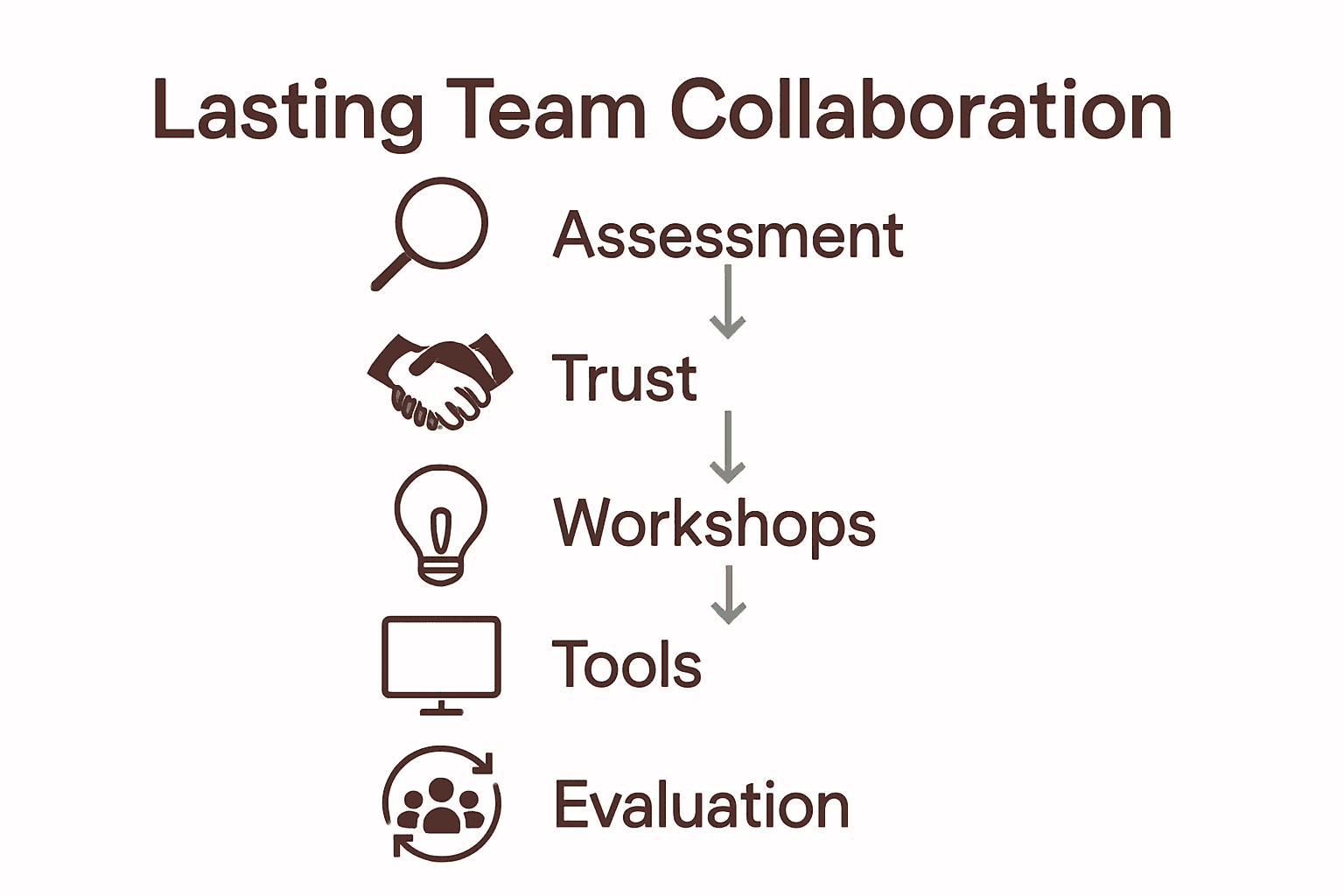
Here’s a summary of each step’s main objective, key activities, and outcomes:
| Step | Main Objective | Key Activities | Outcome |
| 1: Assess Team Dynamics | Diagnose team dynamics Set intentions |
Assessment session Facilitated discussion Self-assessments |
Clear team charter Shared understanding |
| 2: Design Group Experiences | Build trust & deeper connections | Team-building activities Diverse experiences Reflection sessions |
Psychological safety Mutual trust |
| 3: Facilitate Workshops | Foster active collaboration | Interactive workshops Hands-on projects Group discussion |
Creative teamwork Shared problem solving |
| 4: Integrate Tools | Enable ongoing connection | Tool selection Workflow mapping Personalized use |
Digital ecosystem Continuous synergy |
| 5: Evaluate & Reinforce | Measure impact Encourage growth |
Pre/post assessments Reflection meetings Ongoing feedback |
Stronger bonds Continuous improvement |
Take Your Team Beyond the Office: Experience True Connection at The Nest
Are you ready to move beyond surface-level team building and finally solve the real issues highlighted in “How to Build Team Connections for Lasting Collaboration”? If your team struggles with misaligned communication, lack of trust, or sterile, unproductive meetings, it is time to try something radically different. At The Nest, we bring the steps from your article to life, guiding your team to assess dynamics, build trust through immersive group experiences, and cultivate genuine collaboration far away from everyday distractions.
Frequently Asked Questions
How can I assess my team’s dynamics effectively?
To assess your team’s dynamics, schedule an intentional assessment session where all members can openly discuss their communication styles and challenges. Use facilitated discussions and self-assessments to gather insights within one meeting.
What engaging activities can I design to build trust among team members?
Select activities that go beyond typical icebreakers, focusing on collaborative problem-solving or creative workshops. Aim to implement at least one team-building experience each month to enhance connections and foster psychological safety.
How do I structure interactive workshops for better collaboration?
Design workshops with clear objectives that promote active participation through hands-on activities. Incorporate individual and group reflections, and strive to engage participants through diverse methods during each workshop session.
What tools should I integrate for ongoing team collaboration?
Choose collaborative tools that fit your team’s communication style and workflow needs, such as document sharing and real-time editing platforms. Implement these tools within the next quarter to enhance team synergy and minimize misunderstandings.
How can I evaluate the effectiveness of our team-building efforts?
To evaluate your team-building activities, create pre and post-assessments that capture both qualitative and quantitative feedback. Schedule regular reflection sessions with your team to analyze insights and adapt activities based on the findings, aiming for at least one evaluation every two months.
What steps can I take to reinforce team bonds continuously?
Reinforce team bonds by regularly scheduling intentional interactions and reflection meetings to discuss progress and challenges. Make this a consistent practice, conducting check-ins bi-weekly to ensure ongoing team development and improvement.