
Did you know that over 70 percent of professionals worldwide now work in virtual or globally distributed teams? As workplaces stretch across continents, understanding how to collaborate across cultures and time zones has become more than a modern convenience. With the right strategies, global teams can unlock new perspectives, drive innovation, and turn distance into a competitive advantage in today’s interconnected business world.
Defining Collaboration in Global Teams
Collaboration in global teams represents a dynamic approach to achieving organizational goals across geographical boundaries. Virtual teams have transformed how professionals work together, breaking down traditional workplace constraints and creating opportunities for seamless international cooperation. According to Wikipedia, a virtual team refers to a group of individuals working together from different geographic locations while relying on communication technology.
At its core, collaboration involves two or more people working together to complete tasks and create shared value. In global contexts, this means leveraging digital tools and platforms to bridge physical distances. Key characteristics of effective global team collaboration include:
- Consistent and transparent communication
- Shared digital workspaces
- Clear goal alignment
- Cultural intelligence
- Robust technological infrastructure
The power of global collaboration lies in its ability to integrate diverse perspectives and talent. By transcending geographical limitations, teams can tap into a worldwide talent pool, bringing together professionals with unique skills and insights. As global business becomes increasingly interconnected, understanding and mastering virtual collaboration isn’t just an advantage, it’s a necessity for modern organizations seeking to remain competitive and innovative.
Types and Structures of Global Teams
Global teams come in diverse configurations, each designed to meet specific organizational needs and project requirements. Virtual teams represent a fundamental model in modern workplace collaboration, characterized by their geographic dispersion and reliance on technological communication. According to Wikipedia, these teams leverage information and telecommunication technologies to accomplish tasks through both synchronous (like video conferencing) and asynchronous (such as email and discussion boards) interactions.
Research from arXiv identifies several prominent team structures that organizations commonly deploy:
- Project Teams: Time-bound groups focused on specific deliverables
- Collectives: Loosely connected networks with shared goals
- Agile Teams: Flexible, iterative groups emphasizing rapid adaptation
- Scrum Teams: Structured teams following specific frameworks for product development
The selection of a team structure depends on multiple factors including project complexity, organizational culture, and required outcomes. Successful global teams recognize that no single model fits all scenarios. Instead, they remain adaptable, allowing team composition and communication strategies to evolve based on immediate project demands and long-term strategic objectives. This flexibility enables organizations to optimize collaboration across geographic and cultural boundaries, transforming potential challenges into opportunities for innovation and collective achievement.
| Team Type | Key Features | Typical Use Cases |
| Project Team | Task-focused Time-limited Specific deliverables |
Product launches Short-term projects |
| Collective | Loosely connected Shared goals Flexible involvement |
Knowledge sharing Innovation communities |
| Agile Team | Rapid iteration Self-organizing Adaptive planning |
Software development Fast-changing environments |
| Scrum Team | Defined roles Sprint cycles Framework-driven |
Product development Continuous improvement |
Key Elements Driving Team Collaboration
Successful global team collaboration hinges on complex dynamics that transcend traditional workplace interactions. Cross-cultural communication emerges as a critical foundation for effective teamwork, requiring nuanced strategies to bridge potential gaps. According to research from Phys.org, successful teams engage in sophisticated code-switching behaviors, adapting communication styles to enhance understanding and knowledge sharing across diverse cultural contexts.
Key elements driving effective team collaboration include:
- Adaptive communication strategies
- Cultural intelligence
- Technological fluency
- Transparent communication protocols
- Mutual respect and understanding
Research from ResearchGate highlights critical challenges in global team dynamics, such as language barriers and misinterpretation of non-verbal cues. Overcoming these obstacles requires intentional strategies like comprehensive cultural training, clear communication guidelines, and leveraging advanced technological platforms that facilitate seamless interaction. Leadership plays a pivotal role in modeling inclusive communication, creating an environment where diverse perspectives are not just tolerated, but actively celebrated and integrated into team workflows.
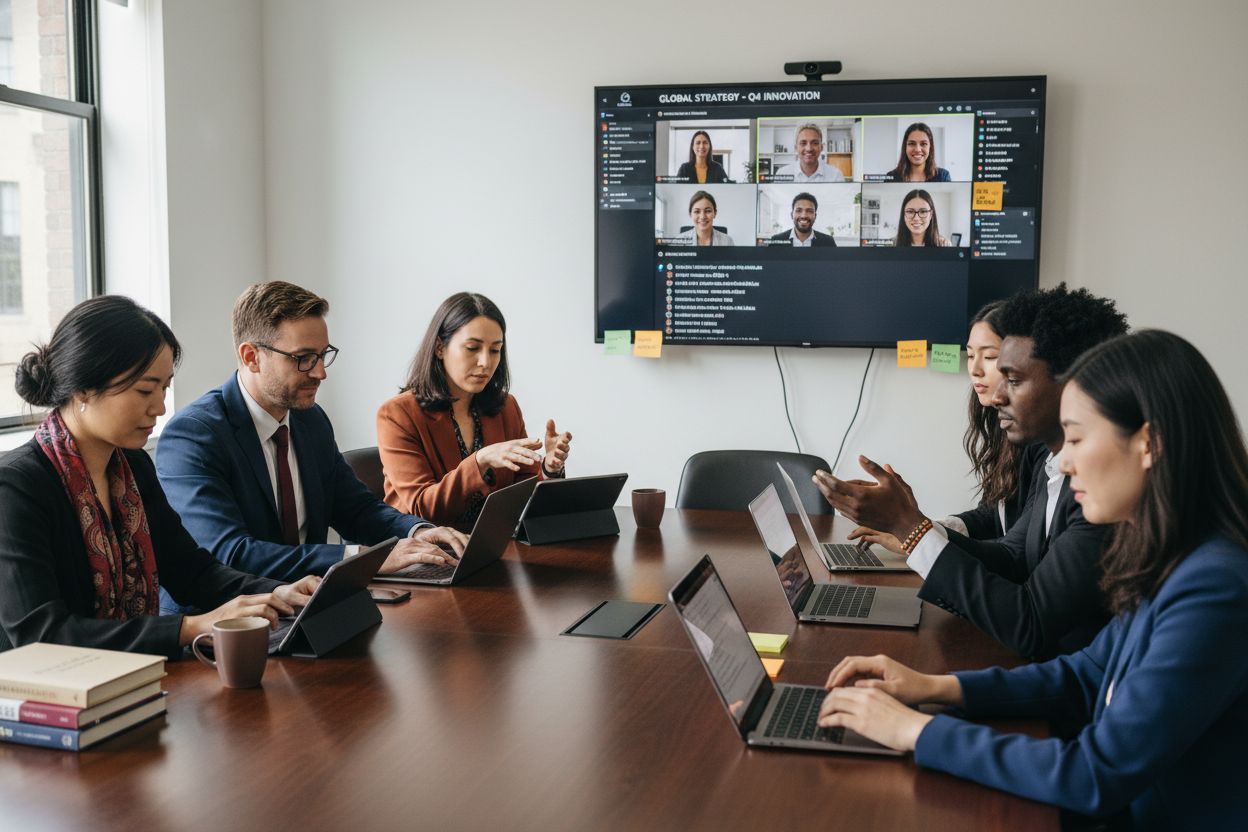
Cross-Cultural Dynamics and Communication
Cross-cultural communication represents a complex, nuanced skill that goes far beyond simple language translation. Intercultural competence requires deep understanding, empathy, and strategic adaptation to diverse communication styles and workplace expectations. According to insights from Global Team, building effective cross-cultural communication involves multiple strategic approaches.
Key strategies for navigating cross-cultural communication include:
- Building cultural awareness during onboarding
- Choosing communication tools that support nuanced interactions
- Encouraging a ‘curious first’ mindset
- Aligning expectations around time, feedback, and conflict resolution
- Utilizing visual communication to bridge language gaps
Research from Socium emphasizes the importance of creating a unified corporate culture that transcends individual cultural backgrounds. This involves promoting psychological safety, encouraging open and inclusive dialogue, and establishing clear communication norms that respect diverse work rhythms. Successful global teams recognize that effective cross-cultural communication is not about eliminating differences, but about creating an environment where those differences become sources of strength, innovation, and collective understanding.
Best Practices for Remote Team Success
Building successful remote global teams requires intentional strategies that transcend traditional workplace approaches. Remote collaboration demands a sophisticated blend of technological tools, cultural understanding, and strategic communication. According to insights from Global Team, effective remote teams combine synchronous and asynchronous communication methods to create flexible, inclusive work environments.
Key best practices for remote team success include:
- Leveraging mixed communication platforms
- Establishing clear communication guidelines
- Dedicating time for relationship building
- Accommodating diverse time zones
- Investing in cultural awareness training
- Using visual communication tools
Research from Work in Virtual highlights emerging trends for 2025, including the integration of AI-powered translation tools and asynchronous communication strategies. Successful remote teams recognize that technology is just one piece of the puzzle. The real magic happens when organizations create a culture of trust, curiosity, and mutual respect, enabling team members to collaborate effectively despite geographical and cultural differences. By prioritizing clear expectations, continuous learning, and adaptive communication strategies, global remote teams can transform potential challenges into opportunities for innovation and collective achievement.
Common Challenges and How to Overcome Them
Global team collaboration is fraught with complex challenges that extend beyond simple communication barriers. Cross-cultural interactions require sophisticated strategies to navigate potential misunderstandings and operational friction. According to research from ResearchGate, primary challenges include language barriers, non-verbal misinterpretation, and uneven language proficiency across team members.
Key challenges and strategic solutions include:
- Language complexity and misunderstandings
- Non-verbal communication gaps
- Cultural power dynamics
- Time-zone related communication fatigue
- Technological integration barriers
Research from ReStaff highlights additional nuanced challenges like cultural power imbalances and time-zone induced burnout. Overcoming these requires a multifaceted approach: embedding cultural integration into business processes, implementing distributed leadership models, developing continuous cultural intelligence, and leveraging technology with human oversight. Successful global teams transform these challenges into opportunities by creating inclusive environments that celebrate diversity, prioritize clear communication, and recognize that difference can be a source of strength rather than a barrier to collaboration.
Step Out of Virtual Silos and Build Real Global Team Connections
Ready to trade virtual fatigue for real connection? Reignite your team’s energy with a purpose-built retreat or workshop at The Nest. Break out of routine and step into a space designed to foster trust, creativity, and momentum. Explore hands-on workshops or book your next strategy session to turn cross-cultural challenges into shared success. Spaces are limited, so start your journey to stronger collaboration today.
Frequently Asked Questions
What are the key characteristics of effective global team collaboration?
Effective global team collaboration includes consistent and transparent communication, shared digital workspaces, clear goal alignment, cultural intelligence, and a robust technological infrastructure.
What types of team structures are common in global collaboration?
Common team structures include project teams, collectives, agile teams, and scrum teams, each serving different organizational needs and project requirements.
How can organizations overcome communication challenges in global teams?
Organizations can overcome communication challenges by implementing adaptive communication strategies, investing in cultural awareness training, leveraging advanced technological platforms, and establishing transparent communication protocols.
What best practices should remote global teams implement for success?
Remote global teams should leverage mixed communication platforms, establish clear communication guidelines, dedicate time for relationship building, accommodate diverse time zones, and invest in cultural awareness training to foster effective collaboration.